Halloween Costume ideas 2015

Digital archives contain as usually understood by professional archivists and historians.

Articles by "Trekking"
2009 accessibility Aconcagua Administration Adventure Racing Adventure Travel Adventurists Advice Afghanistan Africa Alaska Alberto Contador Aleutian Islands Alex Honnold Alps Amazon Amherst Amherst Destinations Amherst Hikes Andes Android 1.5 Android 1.6 Android 2.0 Android 2.1 Android 2.2 Android 2.3 Android 2.3.3 Android 3.0 Android 3.2 Android 4.0 Android Design Android Developer Challenge Android Developer Phone Android Market Animals Animation and Graphics Annapurna Announcements Antarctic App Components App Resources Apps Archeology Arctic Arctic Ocean Argentina Art Asia Atacama Desert Atlantic Ocean August Australia Authentication Autumn Aviation Backpacking Backyard Nature Badwater Ultra Baffin Island Baltic Sea BASE Jumping Beach Belchertown Belchertown Destinations Belchertown Hikes Berkshires Best Practices Bhutan Blogging Tips Blogs Book Review Boots Boston Botswana Brazil Broad Peak California Camping Canada Canyoneering Carstensz Pyramid Catatan Puspitasari Central America Central Massachusetts Checkpoint Tracker Children Chile China Cho Oyu Cinta Wanita Circumnavigation Clay Climate Change Climbing Clothing Code Day Colorado Colrain Congo River Connecticut Connectivity Conservation Area Contests Cool Stuff Craft Cycling Dashboard Dave Cornthwaite Death Valley Debugging Denali Developer Console Developer Days Developer Labs Developer profiles Dhaulagiri Dinosaurs Discovery Channel Dolomites Earth Day Easter Island Easthampton Ed Viesturs Educational Eiger El Capitan Endurance Sports Environmental Erving Europe Events Everest Expedition Exploration Explorers Club Fair Fairy House Farm Film Festival Finland Fireworks Fish Hatchery Fitz Roy Food Fourth of July France Free Games Gasherbrum Gaya Hidup Wanita Gear General Adventure Gestures Giro d'Italia Gobi Desert Google I/O Google Play Google Play services Goshen GPS Granby Grand Canyon Greater Boston Greenland Grossology Exhibit Guidelines Hadley Hadley 350th Half Dome Hang Gliding Hawaii Health Hikes Under One Mile Hiking Himalaya History Holyoke Honduras Horse How-to Hubungan Hunting Ice Cream IME impossible2Possible Independence Day India Indoor info Info Seminar Input methods Intents Internet Interview io2010 Italy Japan JNI John Muir Trail Jordan July June Jungfrau K2 K7 Kalahari Kangchenjunga Karakoram Kayaking Kilimanjaro Lake Michigan Lance Armstrong Layout Leadville 100 Leverett Lhotse Libraries Lintas Peristiwa Location Location and Sensors London Long Riders Ludlow Maine Makalu Manaslu Maple Massachusetts Matterhorn Media and Camera Mendon Meru Peak Mexico Mini Golf Mississippi River Missouri River Mongolia Monson Mont Blanc Motivasi Mount Elbrus Mount Everest Mount Rainier Mountain Biking Mountain View Mountaineering Movies Mt. Shasta Munich Museums Music Nameless Tower Namibia Nanga Parbat NASA National Geographic Nature Navigation NDK Nepal New Hampshire New Zealand Newburyport North America North Pole Northampton Northfield Norway Novelet Nuptse Nusantara Nutrition Ocean Okavango Delta Olympics Open source OpenGL ES Optimization Oregon Orizaba Outdoor Outdoor Retailer Outside Magazine Pacific Ocean Packs Paddling Pakistan Palmer Panduan SEO Parade Paragliding Patagonia Pelham Peru Petting Zoo Photography Playground Plum Island Poland Pool Pottery Pumpkins Quabbin Reservoir Quality Quick Search Box Rafting Rahasia Wanita Ray Zahab Reggio Emilia Research Resources Review Road Rally Rowing Roz Savage Running Sailing Sample code Sandbox School Science Scuba Diving SDK updates Sensors September Seven Summits Shelburne Falls Shisha Pangma Shutesbury Silk Road Site News Skateboarding skiing Skydiving Slacklining Sleeping Bags Snowboarding Solstice South Africa South America South Deerfield South Georgia South Hadley South Natick South Pacific South Pole Southern Ocean Space Speech Input Springfield Stand Up Paddling Storytime Strawberries Sturbridge Summer Summer Camp Summit Sunderland Survival Sutton Swimming Switzerland Tanzania Technology Tel Aviv Tents Testing Teva Mountain Games Text and Input Text-to-Speech Thrifty Tibet Torres Del Paine Touch Tour d'Afrique Tour de France Tour Divide Tower Trail Running Train Trango Towers TransRockies Travel Trekking Triathlon Turkey Turner's Falls Tutorial Ueli Steck Ultra Running Ultramarathon UMass United States USA Pro Cycling Challenge User Interface Utah Vancouver Vermont Video Wadi Rum Wakhan Wanita dan Bisnis Water Websites Western Massachusetts Westhampton Widgets Wildlife Williamstown Wingsuits Winter Wisconsin Worcester World Championship Wyoming Yemen Yosemite Zoo

For many adventure travelers climbing Mt. Kilimanjaro in Tanzania is one of the big items on their bucket list. After all, it isn't every day that you get to trek to the top of the highest peak in Africa. But next year a select group of travelers will not only get the opportunity to do just that, but they'll also get the chance to mountain bike back down the mountain, something that has never been done by commercial travelers before. Best of all, this unique opportunity will be used to raise funds for a very important cause.

In 2013, for the first time ever, adventure travel company Trek Travel will be offering their new WorldServe Kilimanjaro Bike Tour. The 12-day itinerary, which begins February 22, includes a visit to the Serengeti that includes a hot air balloon ride above the plains while the Great Migration plays out below. Travelers will also visit a traditional Maasi village and explore other cultural excursions throughout the area. But of course the real highlight will be a six-day climb of Kili that will culminate with a mountain bike descent. Prior to the climb, each participant will also be sent a brand new Trek mountain bike that they can use to train on before the climb begins. That same bike will then be shipped to Africa for the ride. After the climb is over, the bike is theirs to keep.

This special Kilimanjaro Bike Tour is limited to just 20 people and is designed to be used as a fundraiser to support several projects that will deliver clean drinking water to more than 150,000 people living in Tanzania. As such, the price tag for the trip is quite high, although 90% of the funds are going directly for the cause. Trek Travel is offering three tiered pricing of $25,000, $55,000 and $85,000. The main difference in those levels is simply how much cash goes to the water projects. Of course, the ideal way to go would be for an adventurous traveler to sign up for the tour and raise funds from sponsors to help cover the costs.

This sounds like a fantastic way to visit two of my favorite places on Earth in Kilimanjaro and the Serengeti. Tanzania is a great destination and this would be a way to experience some unique activities while also contributing greatly to improving the life of the people that live there.


KiliClimb Trek Bike Video from WorldServe International on Vimeo.

The North Coast Trail, located inside Cape Scott Provincial Park on Vancouver Island in British Columbia, is a 43.1 km (26.7 mile) hiking route that is considered by many to be one of the best in the world. Rugged and remote, it is a beautiful but challenging trek which my friend Rick McCharles of BestHike.com says is not so much a hike but a backcountry adventure.

Rick recently hiked the entire length of the NCT and shared the experience on the Best Hike Blog, which is always a great site for finding new trails to explore all over the world. Rick begins his initial post on the North Coast Trail by calling it "paradise" but goes on to explain why it is certainly not for everyone. He notes that the trail is so challenging at points that some groups manage a pace of just 1km (.6 miles) per hour! That's a pretty brutal pace and far from a stroll in the park. In typical Best Hike fashion, he then goes on to share logistical information for the trek, listing options for hiking this beautiful beast.

Most hikers who take on the NCT make a 7-day/6-night excursion along its length. After giving us his initial introduction, in his second North Coast Trail post Rick breaks down each of those days and tells prospective backpackers what to expect. He also shares plenty of great video and photos from along the way, helping to further prepare visitors to the trail.

For hikers looking for a remote wilderness adventure, it seems this is a fantastic option. Wildlife abounds, including wolves and bears, and the scenery is simply spectacular. Rick encountered a great deal of mud along the trail, which helps account for some of the slow progress at points, but overall he loved the experience, which involved walks along the shore, treks deep into the forest and a trail that wanders up, over and around some very beautiful places.

Check out his full trip report for more information. Then start making plans to hike this trail yourself.

Back in May of this year, Belgian explorer Louis-Phillipe Loncke set out on a traverse of Poland that began on Mt. Rysy, that country's highest peak, and ended at the Baltic Sea. In between he climbed, trekked and paddled for more than 1200km (745 miles) enjoying a number of unique experiences, and meeting plenty of people, along the way. The video below is a trailer for an upcoming documentary on the trek. It looks like great fun!

Poland Trek- The Trailer from Natalie Hill Photography on Vimeo.

The crack team of bloggers over at CheapTents has turned out yet another good interview to round out the week. This time they've turned their attention on professional adventurer and expedition manager Tim Moss, whose book How to get to The North Pole... and Other Iconic Adventures I reviewed awhile back.

Amongst his numerous adventures, Tim has hiked across Patagonia, swam the length of the River Thames and made first ascents in the Altai Mountains of Russia. He has also circumnavigated the globe in 80 days using 80 different forms of transportation, trekked the Wahiba Desert in Oman and climbed in the Bolivian Andes. Oh yeah! He's also been the logistics manager on more than 100 other expeditions as well.

In the CheapTents interview, Tim talks about his inspirations for pursuing adventure and which of his many exploits has had the greatest impact on his life. He also talks about the toughest decision he's ever had to make on an expedition, which destination has left the best impression on him and how he finds ways to add adventure into his daily life. Moss even provides some advice to would-be adventurers who are thinking about their own expeditions. His best advice? Simply just get started.

As for his favorite pieces of gear, which is always one of CheapTents most intriguing questions. Tim says he loves his Helly Hansen base layers that he has owned for more then ten years. He says he's used them on numerous adventures and they have always performed brilliantly. By coincidence, I happen to own a pair of base layers from HH as well. Haven't had them quite as long as Tim, mine are probably more like six years old, but they are fantastic and have gone with me to many places too.

Enjoy this interview as we head into a weekend. Perhaps it'll inspire you to have an adventure of your own.


Last week I told you about Marshall Ulrich and Dave Heckman's attempt to circumnavigate Death Valley on foot in the dead of summer and I wanted to give you an update on their progress. As of last night, Marshall and Dave have finished their trek, covering more than 400 miles (643km) through one of the harshest environments on the planet.

There aren't a lot of details on the final push just yet, and Marshall's blog hasn't been updated, but the announcement came via Facebook. All told it took the boys 16 days to complete the trip, while enduring temperatures in excess of 100ºF/38ºC every day.

I'm sure we'll hear more specifics about the journey once Marshall and Dave have time to relax and catch-up. But for now, here is a sneak peek at video they shot along the way. It'll give you an idea of what it was like out in the desert for two and a half weeks.

Congrats on completing the trek!


I wrote about this over at Gadling a few days back but thought it was definitely worth mentioning here as well. Nepal has taken the unprecedented move to require all trekkers to hire a guide or porter when trekking inside the country. The decision was announced on the 23rd of July and the new restrictions will go into effect beginning in September.

Solo trekking in Nepal has been a staple of adventure travel for decades and for years it has been a safe country to hike in. But a rise in the number of assaults on the trail and the brutal murder of a Belgian trekker this past June, has spurred the Nepalese government to react. Starting on September 1st, all trekkers will be required to hire a guide or porter to accompany them at all times on the local hiking trails. This was already a requirement for those traveling in groups.

The move isn't expected to have a major impact on Nepal's tourism trade. It is estimated that the cost of a porter or guide will increase the cost of the trip by about $10/day but its value in safety and security goes well beyond that. It is unfortunate that independent travel will no longer be allowed, but it is of the utmost concern for the country that it remains safe for visitors.

When I was in Nepal a few years ago I was traveling as part of a group, so guides and porters were already a requirement. But there were still plenty of trekkers that I encountered who were either there alone or with just a few friends. Those travelers took their time, set their own route and pace and seemed to really be comfortable with the atmosphere. That won't be the case now however and if you've always dreamed of making an independent hike in the Himalaya, you'd better get there soon.

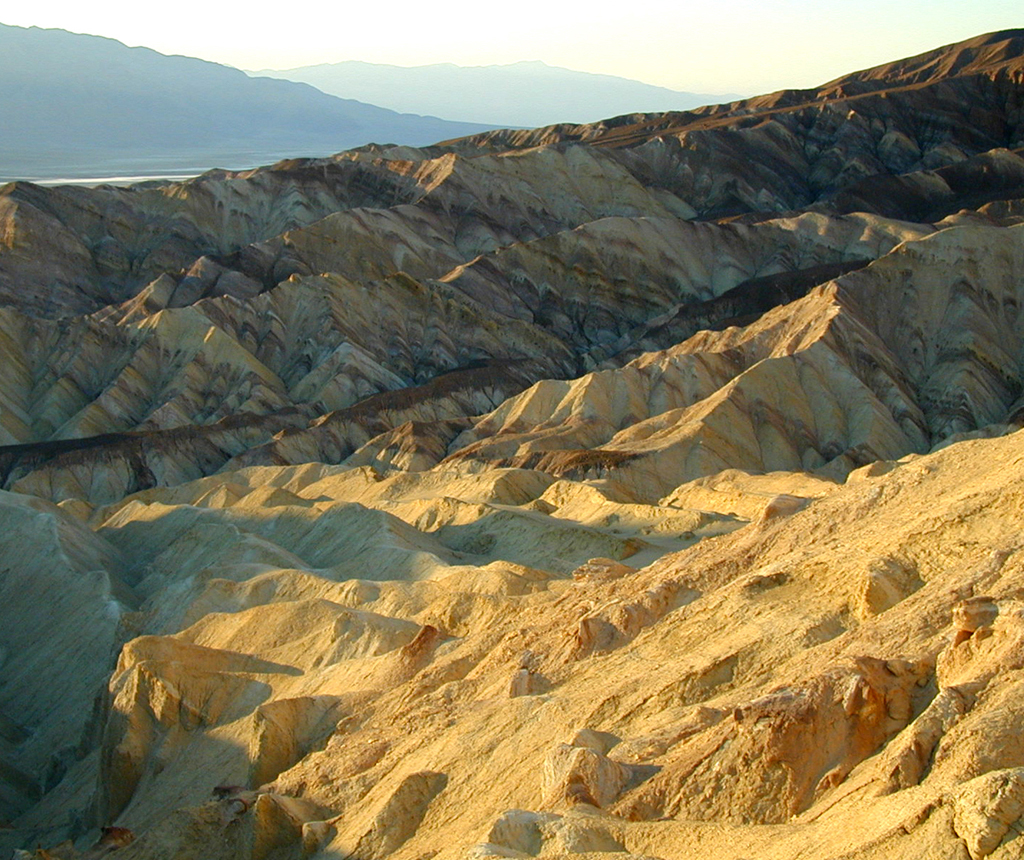
There is no doubt that Death Valley is a place of extremes. It is the hottest, lowest and driest place in North America and during the months of July and August temperatures often exceed 125ºF/51ºC. It is the kind of place that will test the spirit of those that visit it and any living thing that survives there must be a hardy creature indeed.

If anyone knows the challenges that come along with Death Valley it is ultra-runner Marshall Ulrich. The endurance legend has run the Badwater Ultramarathon 18 times and has crossed DV 24. That's an awful lot of time spent in such a harsh and unforgiving landscape. Apparently Marshall enjoys being in that environment however as last week he and Dave Heckman set off to become the first people to circumnavigate the entirety of Death Valley on foot and in the month of July.

Marshall and Dave started their trek last Sunday, July 22nd and have made excellent progress ever since. The entire trip will cover approximately 450 miles (724km) and range from the low of the desert floor to the highs of the nearby mountain peaks, extending as much as 5000 feet (1524 meters) in altitude. The two men are traveling completely self supported as strategically placed supply caches are keeping them resupplied with food and water along the way. They're also carrying 3D video cameras to document their trek as well as capture the beauty of Death Valley National Park.

Updates are coming semi-regularly to Marshall's website (click here!) and you can follow progress on their SPOT page. Judging from that page it appears that they'll be finishing up the trek sometime this week.

Seems like a fantastic adventure and I love their approach. Marshall and Dave are essentially going as light as possible and using their supply caches to provided them with food and water at the appropriate times. I also like that they're doing this expedition to draw attention to a beautiful place that more people should be aware of. I personally can't wait to see some of the video footage that they are shooting.

Big thanks to Ray for sharing this great adventure with me.


The hiking boot market is one of the most competitive and crowded in the entire outdoor industry. There are literally dozens of companies producing a wide variety of footwear designed to fit the specific needs of climbers, trekkers and backpackers everywhere.

Italian boot manufacturer AKU is one such company. For more than 30 years AKU has been designing and testing mountain footwear in the Alps, and over those three decades the company has grown from a small workshop to a large scale operation. The brand is well known in Europe and other parts of the world, but now AKU is coming to North America and their bringing their high quality boots with them.

I recently had my first experience with AKU boots when I put their SL Trek GTX to the test. Lightweight and durable, these shoes are built for hiking. Their design incorporates an intriguing blend of AKU's traditional mountaineering heritage with a mix of modern, high tech elements that make them a great choice for trekking trails in the backyard or the far side of the planet.

One of the first things that struck me when I started hiking in these boots was how comfortable and breathable they are, even in very warm conditions. Hiking Texas trails in the summer heat can be brutal on your feet, but the SL Trek GTX managed to keep my feet dry, happy and blister free. No boot is perfect in hot conditions of course, but these were some of the best I've encountered, especially considering some of the other features it brings to the table.


Performance isn't limited to simply venting heat off our feet either. The aggressive Vibram sole has an impressive grip that provides stability and traction on a wide variety of surfaces, both wet and dry. These boots are obviously well suited for the trail but I found they were equally adept at scrambling up a smooth rock face or across a field of loose scree too. This level of performance and versatility is obviously a cross over from AKU's line of mountaineering boots but considering how unpredictable trail conditions can be, it is nice to know you're wearing a pair of boots that are up to the task.

One of the more unique aspects of AKU's design is a polyurethane exoskeleton, which wraps around the exterior of the boot. That exoskeleton is meant to provide an extended level of stability without adding bulk or weight, and for the most part it works. This feature does give the Trek GTX a certain rigidness however, which made for an extended break-in time. As is generally the case with a pair of new boots, they did eventually loosen up and became more very comfortable but it took a bit longer than I expected.

Other features of the AKU SL Trek GTX include a Gore-Tex liner that helps keep moisture out, a memory foam footbed that molds to the foot the more you wear it and a sole that provides excellent cushioning from the rigors of the trail. All of these elements work well together to create a lightweight, comfortable boot that is durable enough to last for years.

AKU has a winner on their hands with these boots. They not only perform at an extremely high level but they also have their own unique look and feel as well. If you're in the market for a new pair of hiking boots for serious alpine trekking or backpacking, I highly recommend giving these boots a try. Just be prepared to give them ample time to loosen up and break in and you're likely to find you have a fantastic pair of boots that will accompany on far flung adventures for a long time.

(MSRP: $329)


At 5636 meters (18,491 ft) in height, Pico de Orizaba is the tallest mountain in Mexico and the third highest in all of North America. The video below documents a climb up the massive volcano as part of the Challenge 21 expedition with filmmaker Josh Wolff joining climber Jake Norton on quite an adventure. Orizaba is a popular, yet challenging, climb that is not unlike a trek to the top of Kilimanjaro in Africa in that it is mostly a non-technical climb. But the views from the top are  beautiful and rewarding after a tough hike. This video serves as a good introduction to the climb and the efforts that Challenge 21 are undertaking to raise awareness of the need for clean drinking water.


The battle for technology on your wrist has just gotten a bit more interesting. Over the past year or so, the Sunnto Ambit has been the darling of the outdoor community, offering adventurers a host of functionality, including GPS technology, in a stylish and rugged watch. But Garmin, one of the leaders in both GPS and outdoor timepieces, hasn't exactly been sitting on their laurels. Today the company has officially announced the newest addition to its line-up, the fenix watch, which looks to be an outstanding product designed specifically for the outdoor market.

As you've no doubt already guessed, GPS functionality is at the heart of the fenix. Garmin promises simple and easy to use, "hands-free" navigation no matter which direction the watch is facing or how thick the forest canopy overhead. Navigational tools allow users to not only mark waypoints (Up to 1000!) along their route but also download trails from their computer, while a built in tracklog plots the course and provides an easy "trackback" option to get you safely back to the trailhead.

In addition to the typical watch functionality that we'd all expect he fenix also includes an altimeter, barometer and 3-axis compass, all of which come in handy when hiking and backpacking, particularly in the mountains. It contains a database of sunrise and sunset times based on location, keeps track of distance traveled and elevation changes, and is waterproof down to 50 meters (165 ft).

 If all of that isn't enough, the fenix also has the capability to wirelessly connect to other devices to extend its capabilities even further. For instance, it can be paired with an external temperature cage to get more accurate weather readings. Runners will have the option to add a heart monitor to track performance more closely and the watch will even be able to interact with "compatible" smartphones to share data as well. If I had to guess which phones will be compatible, I'd say iPhone and Android, although I haven't seen that confirmed anywhere as of yet.


As with all GPS devices, battery life is key to performance. The fenix comes with a rechargeable lithium-ion battery that is rated for 16-50 hours in GPS mode, which is to say when the GPS featues are activated. Sensor mode, which is when the watch is configured to work with external devices, will net you a battery life of about 3 weeks, while watch mode doubles that to 6 weeks.

The fenix is available for pre-order now with a $399.99 price tag. That puts it squarely in the same market as GPS enabled watches from competitors and is fairly reasonable considering the tech they've got packed in here. It is expected to start shipping in August.

I'm looking forward to checking the fenix out while at Outdoor Retailer next month. I'm sure Garmin will have it prominently displayed in their booth and I'd love a watch like this not only for travel but for daily runs and bike rides. If I get my hands on a review unit I'll be sure to share some thoughts.


At the beginning of May I posted a story about a non-proft organization called the Heroes Project, a non-profit organization founded by Everest summiteer Tim Medvetz to help wounded vets overcome their physical challenges by climbing some of the tallest and most iconic mountains on the planet. Tim, you may recall, suffered a severe injury of his own when he was in a terrible motorcycle accident some years back that required metal implants, a long recovery time and lots of physical therapy. Motivated by that challenge, he went on to climb Everest as part of Discovery Channel's Everest: Beyond The Limit.

On June 30th Tim will set off on his next expedition this time traveling to Africa to climb Mt. Kilimanjaro, the tallest peak on the continent. Accompanying him on that journey will be Marine Staff Sergeant Mark Zambon, who lost both of his legs while serving a tour of duty in Afghanistan last year. This will be both a tremendous challenge to Mark and a fantastic adventure as he treks to the Roof of Africa.

We can all follow Tim and Mark on their journey as they'll be posting regular audio dispatches to the First Ascent Facebook page. First Ascent is of course the line of outdoor gear from Eddie Bauer that has become quite popular with climbers over the past few years. They are a proud sponsor of the Heroes Project and will help share the progress of this expedition.

Good luck to Tim and Mark. Enjoy the climb!

Back in May I posted a couple of updates on the Poland Trek, a 1200 km (745 mile) journey undertaken by Belgian adventurer Louis-Philippe Loncke. The expedition, which began with a climb up Mount Rysy, the tallest peak in Poland and finished on the Baltic Sea, which Loncke reached at the beginning of June after traveling on foot and kayak across the length of the country.

When last we checked in with Lou-Phi he was reporting that the weather was good but water levels on the rivers were low. That changed dramatically near the end of the expedition however, as the sunny, relatively warm and dry weather came to an end with torrential rainfalls making the final three days a rather cold and wet paddle to the Baltic.

The weather wasn't the only obstacle to overcome on his way to the finish line. Loncke says that as he neared the coast there were a number of close calls with man-made obstacles that made it a challenge as well. While in the more remote regions of Poland he enjoyed relative solitude, but as he reached populated areas, boat and barge traffic increased, causing more than a few close calls. At one point he was nearly run down by a barge that had no idea he was there and a close encounter with an unexpected cable in the water nearly left him cut in two.

Fortunately he did survive the journey and is now at home planning his next escape. Much of the Poland Trek was documented on video however, so expect to see plenty of footage from the expedition down the line.

Congrats to Lou-Phi for wrapping up another successful expedition.

A few days ago Canadian motivational speaker Spencer West completed an amazing challenge by climbing to the summit of Mt. Kilimanjaro, the tallest peak in Africa. But unlike most who take on that mountain, West is a double-amputee who was making the climb to raise money for charity.

Dubbed the Redefine Possible expedition, Spencer took on Kili to raise funds for the Free The Children organization, an international charity that looks to empower young people through education. To date the climb has raised more than $500,000, which is earmarked for a project to bring clean drinking water to children in Kenya.

Standing 5895 meters (19,340 ft) in height, Kili is a challenge for any hiker. But for West it was a completely different level of difficulty. Born with a rare genetic disease called sacral agenesis, Spencer lost his legs at the age of five. He was determined to not let that be barrier to him leading a normal life however and he has used his upbeat message to inspire others as well.

On June 12 Spencer, along with his best friends David Johnson and Alex Meers, set out on an eight day climb of Kilimanjaro, which West did on his hands and in his wheelchair. Yesterday they reached the summit in time to watch the sun come up over Africa. Most of their journey has been captured in photos, blog posts and videos. You can learn more about their experience at the expedition's official website, where you can also donate to the cause if you're so inclined.

Checkout video from summit day below. Very inspirational!


I've written about the Walking Home From Mongolia expedition on more than one occasion. For those who don't remember, it was the epic journey undertaken by Rob Lilwall and Leon McCarron during which they traveled on foot from the capital of Mongolia – Ulaan Baator – back to Hong Kong, during the dead of winter no less. The journey covered 5000km (3100 miles) and took 195 days to complete, ending exactly one week ago today.

Our friends over at CheapTents.com were able to get in touch with Leon, who is already back home in the UK, and pick his brain about the expedition. As you can imagine, he had a lot of interesting things to say. You can read the full interview here, in which he talks about his favorite parts of the walk, how he and Rob stayed motivated for weeks on end, which gear items performed well and what the two men might plan to do next. As usual with CheapTents, the interview is insightful, interesting and fun, and anyone thinking of doing a similarly long journey can probably pick up more than a few nuggets of good information.

Rob and Leon actually filmed their adventure and it is now being edited for airing on National Geographic. You can catch a glimpse of what they have in store for us in the clip below and keep your eyes peeled for the final film down the line.

Congrats to Rob and Leon on an amazing adventure and thanks to CheapTents for another good interview!


When Outdoor Research offered to send me their new Axiom lightweight shell for a review, I jumped at the chance, even though I knew it had a lot to live up to. After all, not only is it the latest and greatest creation from one of my favorite gear companies, the Axiom has already earned Gear of the Year awards from both Outside magazine and National Geographic Adventure. To say my expectations were set high is an understatement, but after using the shell for a few weeks I can safely say that it not only lives up to the hype, it actually exceeds it.

Weighing in at just 13.5 ounces (382 grams), the Axiom is made from the newest fabrics from Gore-Tex. Normally that would tell me two things, first the jacket will perform very well in bad weather, and two it'll probably cook the wearer in the process. Gore-Tex is well known for its ability to repel moisture but it is equally well known for how warm it can get underneath. That simply isn't the case with this new, 21st century, version of the fabric however and I was pleasantly surprised to discover that the Axiom maintained the great performance in inclement weather but gained the ability to breathe freely as well. So much so that Outdoor Research was able to save weight simply by eliminating pit vents altogether.

Lightweight and breathability aren't the only elements that this new Gore-Tex fabric brings to the table. It also has a higher level of elasticity that allows for more freedom of movement while hiking or climbing. I always appreciate outdoor apparel that doesn't impede motion, particularly when you need it to work well under the most demanding circumstances. Thanks to this newly developed fabric, the Axiom can keep you dry and moving swiftly no matter what the weather throws at you.

New Gore-Tex is only half of the equation however and Outdoor Research has incorporated some great design choices to make the Axiom stand out as well. For instance, the jacket features three zipped pockets, each of which can be accessed even while wearing a backpack. As you would expect, the adjustable hood has been built to fit over a helmet and the zippers are high quality and weather resistant.

The Axiom makes a great jacket for any number of outdoor activities from peak bagging and trail running to cross country skiing and backpacking. Its combination of light weight, excellent fit and fantastic performance in inclement weather have made it the new standard that all other shells will be compared to. OR prices the Axiom at $375 which is a relative bargain compared to much of the competition as well.

If you're in the market for a new lightweight shell, there seems to be one clear-cut choice at the moment. The Axiom performed above and beyond my expectations and I have a feeling it will do the same for you.

Two Belgian adventurers are in the final stages of planning a canoe and hiking expedition to the remote Inari Lake, located in Finland. The journey, which is set to begin in September, will be three weeks in length and looks to put a heavy emphasis on exploration of the region. The duo hopes to make a complete circumnavigation of the lake, provided the weather allows, spending plenty of time on and off the water.

Bert Poffé and Dirk Michiels will travel on foot and by canoe as they not only paddle the shores of Inari but also trek through the wilderness that surrounds it. The lake, which is the third largest in Finland, falls above the Arctic Circle in the northernmost region of Lapland. Covering 1040 square kilometers (646 sq. miles), Inari has more than 3000 islands sprinkled across its waters, while a wild and untamed wilderness lines its banks.

Refreshingly enough, Bert and Dirk say that they won't be chasing any speed records or racing from point to point on a map. They intend to explore the region as much as they can and that means making slow, deliberate progress. It is their hope that by taking this approach they can genuinely get to know the lake and all of its hidden corners.

In preparation for their expedition they've launched a blog that provides much more information on Inari Lake and the region they'll be visiting. Hopefully they'll also be updating that blog as they travel to keep us not only informed of their progress but share what ever they discover there.

Personally I love these small, grassroots adventures that send adventurous men and women off on excursions to remote areas. These two men sound like they have the hearts of explorers past and visiting remote Lapland should be an amazing experience.

Machu Picchu is amongst the most visited destinations in the world and for good reason. The site is a spectacular ancient ruin set atop a mountain in Peru with the Andes as a dramatic backdrop. One of the best places to view the Inca fortress is from Huayna Picchu, a nearby peak that requires a bit of a hike to reach. The video below, which was shared by one of my compatriots at Gadling yesterday, takes us on the journey to the top of that mountain, which does indeed provide a fantastic pay off.


Last week I wrote a piece about my recent visit to Jordan, in which I highlighted that country's many historical, cultural and religious attractions. Places like Petra, the Greco-Roman city of Jarash and the biblically important Bethany Beyond the Jordan. Visiting those places can be both inspiring and incredibly humbling at the same time, but after a few days of exploring ancient ruins, I was ready to stretch my legs and enjoy a little adventure. Fortunately, Jordan has plenty of that too. 

The early part of my journey through Jordan was spent in and around the capital city of Amman, which is a vibrant, modern metropolis with a population of more than two million. But a couple of days in and I was ready for some peace and solitude in the desert. Lucky for me our first destination after leaving the city was a quiet eco-lodge called Feynan located to the south.

Feynan is the perfect antithesis of the hustle and bustle of Amman. Quiet and peaceful, the lodge uses solar power to heat water and generate what little electricity that it actually uses. At night, the walkways and guest rooms are lit by candles that give the place a tranquil glow, and the almost exclusively vegetarian meals are made from locally sourced foods. It is all part of Feynan's pledge to have as little of an impact on the environment as possible, and while you're there you may lack for a few amenities, but you'll also never notice. National Geographic called Feynan one of the 50 best ecolodges in the world and  it doesn't take very long understand why. 
As if Feynan wasn't amazing enough on its own, it also happens to sit on the edge of the the Dana Biosphere Reserve, the largest nature reserve in all of Jordan. Dana is nearly 192 sq. km (120 sq. miles) in size and consists of wildly varying landscapes. In the highlands of the Qadisiyah Plateau it reaches an altitude of about 1500 meters (4500 ft) but it also gives way to the sprawling desert flats far below. Sandstone, limestone and granite cliffs abound, and slot canyons slice through the rock, just begging to be explored. 

I had the opportunity to take two hikes while in the area, one at sunset and another at sunrise, and both were spectacular. The red glow of the rising and setting sun cast the area around Feynan in a warm light that was both foreign and familiar at the same time. That light brought the reds, oranges and pinks of the desert alive in a gorgeous kaleidoscope that can't be completely conveyed in photos, but will always stay with me in my mind. It was easily one of the quietest, most peaceful places I've had the opportunity to visit in my travels. 

Unfortunately my stay in Feynan was far too brief and we were on the road once again the next day. But if if I had to pick one place to return to in Jordan, it would likely be here. I'm told that those mysterious canyons offer fantastic trekking and climbing, and that deep inside there are hidden waterfalls and rock formations that few are lucky enough to ever see. I would like to go back and spend a few days just trekking those valleys and enjoying the serene life at the eco-lodge. 

I can't say I was entirely happy to leave the Dana Biosphere behind, but another fantastic destination lay ahead. Located in southernmost Jordan is the Wadi Rum desert, which is another wide-open expanse that broken up by towering sandstone and granite formations. Wadi Rum is another one of Jordan's premiere adventure destinations and visitors looking for a wilderness experience will not go away disappointed. There are trekking and climbing opportunities in abundance and camel safaris offer a unique way to explore the rolling dunes. 

We took in the beauty of Wadi Rum from the back of a couple of 4x4's and spent the better part of the afternoon following in the footsteps of Lawrence of Arabia. There we saw his Seven Pillars of Wisdom and learned how the British officer helped to organize and lead the Arab revolt agains the Ottoman Empire during World War I. Lawrence still casts a large shadow over Jordan, although his myth is not so grand as it is in the West. 

Our drive took us past natural rock bridges, spiraling towers and granite walls that would leave many climbers licking their lips with anticipation. We plowed through deep sands and careened over sand dunes 20 stories high, while soaking up the stark beauty that has made Wadi Rum a favorite destination for travelers. And at the end of the day we stopped at a Bedouin camp that would be our resting spot for the night. That evening we partook in a traditional Bedouin meal, sang songs, danced and smoked the Hookah pipe, while overhead a billion stars twinkled brightly. It was one of the most breathtaking night skies I have ever seen, and well worth a trip deep into the desert alone. 

The next morning a group of us were up at the break of dawn in order to get an entirely different perspective of Wadi Rum. Scrambling into a hot air balloon, we spent the early hours of the day drifting a thousand meters above the desert floor, watching from the perfect vantage point as the suns rays crawled across the landscape below. It was my first time in a hot air balloon, and I found it to be a wonderfully serene experience. When the flame wasn't blasting hot air into the balloon above, we quietly drifted along wherever the wind took us. It was the perfect way to start the day and a reminder of just how vast and beautiful the desert truly was.

Once again, my time in Wadi Rum was far too short and it is yet another Jordanian destination that I would love to return to. Adventurous travelers can actually trek across the desert on foot, camping out beneath the stars each night. If you have the time, that is the way I would recommend seeing this place that has captivated visitors for hundreds of years. 

My visits to the both the Dana Biosphere Reserve and Wadi Rum showed me a completely different side to Jordan than I had seen while visiting its historical wonders. It reaffirmed its standing as a great destination for adventure travelers as well. Trekkers and climbers will find plenty to love in both places, provided they schedule enough time in their itineraries to take it all in. 


There are a lot of companies that make hiking boots these days, many of which have no business doing so. They stock their line-up with way too many options and colors and they seem more designed for fashion than function. That isn't the case with Danner however, a company that has been around for 80 years and has maintained a reputation for creating boots that are durable, rugged and comfortable even in the most challenging of conditions.

I recently received a pair of the company's new top-of-the-line Crater Rim hiking boots and to be honest, I was a bit underwhelmed when I first took them out of the box. With their simple, classic design these boots don't look much different than something you would have found on store shelves twenty years ago, although that isn't necessarily a bad thing. In terms of looks, this is the quintessential hiking boot, but when you're use to testing shoes that come in increasingly unique colors and designs, the Crater Rim did little to set itself apart.

Of course, I'm of the mind that looks don't mean much in a hiking boot, it's performance on the trail that really matters. With that in mind, I was eager to slip into these boots and take them for a test drive. When I did that however, I was once again a bit underwhelmed. The boots were a bit stiff and they felt somewhat cumbersome on my feet, for lack of a better word. As I walked around my apartment testing them out for the first time, I wasn't sure what to make of these boots with the unassuming looks and the uncompromising fit.

Then a funny thing happened. The longer I wore them the more they started to feel good on my feet. The nubuc leather began to loosen up just enough and my pair of Crater Rims started to become more flexible.  Even better, it felt like they were cradling my feet quite nicely and before I knew it was enjoying these new boots more than I had initially thought possible. By the time I drove to the trail I was more than ready for a good long hike.

While on that hike Danner's hand crafted boots, put together in their Portland factory, continued to impress. The thick soles – the same ones that I found cumbersome not long before – proved to be a great at protecting my feet on the rocky Texas trails and the waterproof Gore-Tex liner remained highly breathable, keeping my feet dry throughout the day. The only hitch in the entire trek was that the boot rubbed my ankles in the early miles of the hike, although like the rest of the boot that loosened up over time.

Make no mistake, Danner's Crater Rim boots are a hard core option for those who demand a lot out of their boots, Their rugged looks are not just for show and the boots have worn very well even after a number of hikes. My pair still look practically new, which bodes well for their longterm health. Be warned, the boots do come with a hard core price tag as well. Ringing in at $300, they may be a bit more expensive than most people want to pay, but from my experience they are worth the money. After all, they're made by hand, right here in the U.S. and the quality shines through.

Whenever I test a new pair of boots I invariably compare them to my favorite pair of Asolos that have accompanied me on trips to Everest, Kilimanjaro and beyond. Those boots are comfortable and very durable and love the way they feel on my feet. They also happen to cost less than the Crater Rims. That said, this is the first pair of boots I've found in years that can actually perform on the same level of those boots and may actually surpass them for long term durability. I'll need to wear them on a few globe trotting adventures to be sure, but at this point I have a really great feeling about that.

If you're in the market for a new pair of hiking boots, and you're looking for something that can handle just about anything you throw at them, then look no further than the Crater Rim by Danner. Quality costs money but it'll also pay off over the lifespan of the shoes, and your feet will thank you on your next long distance trek.

Just don't let your initial impressions turn you off to these boots. This is definitely a case of not judging a book by its cover. Great boots for great adventures!

MKRdezign

Contact Form

Name

Email *

Message *

Powered by Blogger.
Javascript DisablePlease Enable Javascript To See All Widget