Halloween Costume ideas 2015

Digital archives contain as usually understood by professional archivists and historians.

Articles by "Travel"
2009 accessibility Aconcagua Administration Adventure Racing Adventure Travel Adventurists Advice Afghanistan Africa Alaska Alberto Contador Aleutian Islands Alex Honnold Alps Amazon Amherst Amherst Destinations Amherst Hikes Andes Android 1.5 Android 1.6 Android 2.0 Android 2.1 Android 2.2 Android 2.3 Android 2.3.3 Android 3.0 Android 3.2 Android 4.0 Android Design Android Developer Challenge Android Developer Phone Android Market Animals Animation and Graphics Annapurna Announcements Antarctic App Components App Resources Apps Archeology Arctic Arctic Ocean Argentina Art Asia Atacama Desert Atlantic Ocean August Australia Authentication Autumn Aviation Backpacking Backyard Nature Badwater Ultra Baffin Island Baltic Sea BASE Jumping Beach Belchertown Belchertown Destinations Belchertown Hikes Berkshires Best Practices Bhutan Blogging Tips Blogs Book Review Boots Boston Botswana Brazil Broad Peak California Camping Canada Canyoneering Carstensz Pyramid Catatan Puspitasari Central America Central Massachusetts Checkpoint Tracker Children Chile China Cho Oyu Cinta Wanita Circumnavigation Clay Climate Change Climbing Clothing Code Day Colorado Colrain Congo River Connecticut Connectivity Conservation Area Contests Cool Stuff Craft Cycling Dashboard Dave Cornthwaite Death Valley Debugging Denali Developer Console Developer Days Developer Labs Developer profiles Dhaulagiri Dinosaurs Discovery Channel Dolomites Earth Day Easter Island Easthampton Ed Viesturs Educational Eiger El Capitan Endurance Sports Environmental Erving Europe Events Everest Expedition Exploration Explorers Club Fair Fairy House Farm Film Festival Finland Fireworks Fish Hatchery Fitz Roy Food Fourth of July France Free Games Gasherbrum Gaya Hidup Wanita Gear General Adventure Gestures Giro d'Italia Gobi Desert Google I/O Google Play Google Play services Goshen GPS Granby Grand Canyon Greater Boston Greenland Grossology Exhibit Guidelines Hadley Hadley 350th Half Dome Hang Gliding Hawaii Health Hikes Under One Mile Hiking Himalaya History Holyoke Honduras Horse How-to Hubungan Hunting Ice Cream IME impossible2Possible Independence Day India Indoor info Info Seminar Input methods Intents Internet Interview io2010 Italy Japan JNI John Muir Trail Jordan July June Jungfrau K2 K7 Kalahari Kangchenjunga Karakoram Kayaking Kilimanjaro Lake Michigan Lance Armstrong Layout Leadville 100 Leverett Lhotse Libraries Lintas Peristiwa Location Location and Sensors London Long Riders Ludlow Maine Makalu Manaslu Maple Massachusetts Matterhorn Media and Camera Mendon Meru Peak Mexico Mini Golf Mississippi River Missouri River Mongolia Monson Mont Blanc Motivasi Mount Elbrus Mount Everest Mount Rainier Mountain Biking Mountain View Mountaineering Movies Mt. Shasta Munich Museums Music Nameless Tower Namibia Nanga Parbat NASA National Geographic Nature Navigation NDK Nepal New Hampshire New Zealand Newburyport North America North Pole Northampton Northfield Norway Novelet Nuptse Nusantara Nutrition Ocean Okavango Delta Olympics Open source OpenGL ES Optimization Oregon Orizaba Outdoor Outdoor Retailer Outside Magazine Pacific Ocean Packs Paddling Pakistan Palmer Panduan SEO Parade Paragliding Patagonia Pelham Peru Petting Zoo Photography Playground Plum Island Poland Pool Pottery Pumpkins Quabbin Reservoir Quality Quick Search Box Rafting Rahasia Wanita Ray Zahab Reggio Emilia Research Resources Review Road Rally Rowing Roz Savage Running Sailing Sample code Sandbox School Science Scuba Diving SDK updates Sensors September Seven Summits Shelburne Falls Shisha Pangma Shutesbury Silk Road Site News Skateboarding skiing Skydiving Slacklining Sleeping Bags Snowboarding Solstice South Africa South America South Deerfield South Georgia South Hadley South Natick South Pacific South Pole Southern Ocean Space Speech Input Springfield Stand Up Paddling Storytime Strawberries Sturbridge Summer Summer Camp Summit Sunderland Survival Sutton Swimming Switzerland Tanzania Technology Tel Aviv Tents Testing Teva Mountain Games Text and Input Text-to-Speech Thrifty Tibet Torres Del Paine Touch Tour d'Afrique Tour de France Tour Divide Tower Trail Running Train Trango Towers TransRockies Travel Trekking Triathlon Turkey Turner's Falls Tutorial Ueli Steck Ultra Running Ultramarathon UMass United States USA Pro Cycling Challenge User Interface Utah Vancouver Vermont Video Wadi Rum Wakhan Wanita dan Bisnis Water Websites Western Massachusetts Westhampton Widgets Wildlife Williamstown Wingsuits Winter Wisconsin Worcester World Championship Wyoming Yemen Yosemite Zoo

I am fortunate enough to have a lot of outdoor gear come cross my desk. Everything from the latest hiking boots, sleeping bags and tents to outdoor clothing, electronic gadgets and of course backpacks. Some of it is impressive and innovative and some of it is downright frustrating and poorly designed. On occasion I get to test a piece of gear that turns out to be quite a nice surprise. Something that I expect to be good, but it still exceeds my expectations. This happens to be the case with the new Quick Backpack from Cannondale, a bag designed for cyclists but versatile enough to be used for so much more.

The first thing that caught my attention about the Quick Backpack was just how many storage options it has. In addition to the voluminous interior pocket, complete with padded laptop sleeve, the bag has another large zippered pocket built into the lid and a smaller organizational pocket for storing pens, business cards, USB drives or any other small items that you want to carry with you. Two deep side holsters are perfect for even large water bottles and integrated helmet loops make it a snap to carry your headgear.

Constructed from very high quality nylon, this pack is durable and rugged. I am impressed with how well it handls day-to-day use without a hint of wear and tear and its water-resistant fabrics make it a perfect commuter pack for when you're meeting friends or heading to the office. The designers even had the foresight to line the bottom of the pack with a rubberized fabric that further helps to keep the interior safe and dry.


If I was impressed with the solid construction of the Quick Backpack, I was doubly so with how comfortable it is to wear. The shoulder straps and back panel feature thick padding without compromising ventilation. This helps the pack to carry a heavy load with ease, both on and off the bike, and I found myself choosing this bag not just for my regular rides but also for jetting off to the office as well.

All of my favorite gear have one thing in common and that is a level of versatility that makes them all useful in a variety of situations. The Cannondale Quick Backpack certainly fits that description. As I mentioned above, this bag is good enough to be used not just while cycling but for your daily needs or even while traveling. I love how large and easy to access the pockets are, which helps to keep all of your gear well organized and close at hand. I also love how well padded and well built it is as well, which not only helps protect the contents of the bag but ensure that you'll be using it for years to come.

If you, or the cyclist in your life, is looking for a pack that is comfortable, durable and versatile, then look no further. Cannondale has you well covered. Oh, and this pack also happens to be very affordable. Priced at just $120, the Quick Backpack is quite a bargain.

A few weeks back I positively reviewed the Guide 10 Plus Adventure Kit from Goal Zero, calling it the best option for charging gadgets while traveling in the backcountry. But that kit isn't the only option when it comes to solar charging while on the go and for adventure travelers looking for a more compact solution there a variety of options available. Take for example the Classic2 from Solio, which is a solid update to their original Classic model and a viable alternative for those who prefer to travel light.

The Classic2 manages to wrap three small solar panels into a compact design that collapses down very nicely for storing in your backpack. When you need it to collect sunlight for charging the built-in 3200 mAh battery, the three solar cells slide open like the pedals of a flower, drawing in as much light as possible. The device also includes both a micro and standard sized USB port. The former is used to charge the battery via computer or the included wall adapter, while the latter is used for charging your gadgets.

The addition of the full size USB port is one of the improvements over the original Solio Classic that was released a few years back. That solar charger came with a set of proprietary adapters which weren't exactly convenient to carry along when traveling. The standard USB port ensures the Classic2 will work with nearly any device out of the box, including smartphones, rechargeable headlamps, cameras, GPS devices and so on. Other improvements include a higher capacity battery, a thinner overall design and larger solar panels.

All of those design options add up to a far more efficient and useful charger. The Solio Classic2 is now capable of completely recharging my iPhone a total of about three times and it can do it much more quickly as well. A full charge took roughly two hours to complete, which isn't a whole lot different from plugging it directly into the wall.


The Classic2 is also much faster at charging it's own batteries using the sun, although it is obviously slower than the Goal Zero, which has much larger and more efficient solar cells. Solio says it takes about six hours to fully charge the internal battery, but I found that it varied greatly depending on exposure to the light. In my tests, it was not uncommon for a recharge to take eight or even ten hours, although it was a more consistent and steady process compared to the original Classic.

It should be noted that the Classic2 is capable of recharging a device like the iPad, but those tablets have large batteries and it will completely drain Solio's little charger before you get your iPad completely topped off. It isn't a bad option to extend the battery life of Apple's slate but it's just don't expect it to work miracles either.

For travelers looking for a solar charger to help keep their gadgets powered while away from a more traditional power source, the Solio Classic2 is an excellent option. It will definitely extend the life of your favorite tech toys without adding a lot of undue bulk to your pack. This diminutive solar charger weighs just 10.1 ounces (286 grams) and costs just $100. That makes it a cheap but useful travel companion that you won't want to leave home without.

Over the past couple of months I've posted two trip reports (Part 1 and Part 2) from my friends at Tour d'Afrique who were busy riding 12,000km from Shanghai to Istanbul on their Silk Route tour. They recently finished up that expedition and sent me the video below to share with readers. The short film offers video clips and photos from the ride, giving us all a sense of what it is like to cycle this ancient and epic route. It looks like a fantastic experience and I thank them for sharing some of it with those of us who weren't lucky enough to join them on the ride.

Also, big thanks to Catharina Robbertze for creating the video for us. Great stuff Catharina!

Looking for a compact, yet rugged, wireless speaker system to take on your next backpacking trip? Then look no further than the new Turtle Shell Boombox from Outdoor Tech. This powerful little sound system connects wirelessly to your smartphone or tablet via BlueTooth and pumps out your favorite tunes, podcasts or streaming audio. It is also water resistant, dust and shock proof, and designed to be mounted just about anywhere. It even comes with built-in camera threading, which means it can be mounted on tripods or a variety of other items quickly and easily. It comes with a built-in rechargeable lithium-ion battery that provides 9-10 hours of use and will make a good travel companion for those who need a little entertainment around the campfire.

Outdoor Tech is currently running a Kickstarter campaign to raise funding for the Turtle Shell. They're hoping to get about $40,000 in donations before they go into production. With just under two weeks to go in the campaign, they still have to generate a bit more than $20,000. To get there, they're providing some nice incentives for those who contribute, including selling the Turtle Shell for just $99. When it hits retail, the unit will run $149, so if you're interested, this is a great way to grab one at a discounted price.

Click here to find  out more and check out the video below. Looks like a rugged travel companion for those who enjoy listening to their music on the go.


Well heeled travelers looking for an amazing adventure next year need look no further than the new whitewater rafting excursion from Mountain Travel Sobek. Their new Six Continent Whitewater Adventure, which was announced yesterday, promises to take travelers to the ends of the Earth to quench their thirst for adrenaline.

The 25-day, round-the-world expedition runs from May 9 through June 2 of 2013 and begins in California. The 8-12 participants on the trip will get their feet wet, literally and figuratively, with three days of rafting in the Sierra Mountains. From there they'll jet off to Ecuador for two days of rafting before proceed on to Spain to take on the Noguera Pallaresa in the high Pyrenees. Nairobi, Kenya is the next stop on the journey for three days of rafting on the Athi River, which mixes in great wildlife viewing along with Class II and III whitewater. The Tons River in India is the next stop as the lucky travelers take to the water in the Himalaya, not far from the spectacular peak Nanda Devi. Finally, the trip will wrap up on North Johnston river in Australia, one of the more remote and challenging whitewater runs on that continent.

Whew! Sounds like quite a trip and after reading the press release on it yesterday I immediately wished I were going. At $8695 (without airfare!) this is a bit pricey for my blood, but it was too good of an adventure travel opportunity to not share. And if the itinerary wasn't enticing enough on its own, co-founder of Mountain Travel Sobek John Yost, who has led plenty of river expeditions, will be the personal guide on this adventure. Sounds absolutely fantastic and I'm very jealous of those who get to go on this trip.

Over the past couple of years the iPad has become the one piece of technology that I can't leave home without. When I travel it is my portable communications and entertainment system, providing movies, music, books, magazines, games and more. It is my lightweight, portable workstation, as well as a photo and video editing machine. In short, it is quite possibly the most important item I take with me on the road.

While Apple's tablet is a solid, well built device, there are times when I can't help but wonder if it's a good idea to take it to the far ends of the Earth. Since it's release in the spring of 2010, I've taken my iPad to Everest Base Camp, deep into the African Bush, and to the remote Atacama Desert, just to name a few. To help protect my favorite gadget, I've used several different cases to help keep my iPad safe. Each of them has brought a measure of security to the table, but none have been as rugged and secure as the new 1065 HardBack Case from Pelican.

Designed specifically to accommodate most 10" tablets, the 1065 HardBack is like having an impenetrable shell to keep your gadget safe and sound even under the most extreme conditions. The case is crush-proof, water resistant up to 3 feet in depth and features automatic pressure equalization to keep the contents safe at any altitude. The thick, durable plastic housing provides a great sense of security no matter where you're traveling.


The HardBack isn't just tough on the outside however as the interior provides plenty of protection as well. A foam liner keeps the all important screen safe and sound, while a water proof gasket seals the interior from not only water but excess dust too. A rugged, yet easy to open, latch locks tight and remains firmly closed even while taking plenty of abuse.

Using Pelican's hard case is akin to having luggage specifically designed to protect your iPad. It is a the perfect product for those who need to carry their tablet with them into the backcountry and wrapped in this rugged armor, they can rest assured that there device will be well taken care of. It comes with Pelican's lifetime guarantee and with an MSRP of $49 it is a bit on the high end of iPad cases but considering the level of protection it provides, the cost is actually quite affordable.

The only knock I have on the HardBack is that it is a bit on the heavy side. Weighing in at 1.25 pounds (567 grams) this case isn't exactly a featherweight. Those looking to travel light may pass on Pelican's protective armor in favor of something that is a bit leaner, although they'll almost certainly be giving up some measure of protection. But if you value your iPad the way I do, and you need it with you when you travel, the extra weight is worth it.

Back in July I posted a wonderful trip report from cycling tour operator Tour d'Afrique's amazing Silk Route ride. For those who aren't aware of this tour, it is a 12,000km (7456 mile), 129-day journey from Shanghai, China to Istanbul, Turkey by bike. At the time of the original post, the riders were in the early stages of their adventure, but now they are nearing the end and late last week I received another update from the road. This time that report comes courtesy of Comms Director Catharina Robbertz who had this to say:


Expecting the unexpected
There’s always a certain level of risk involved when travelling and when you’re on the road for more than four months you have to be prepared for anything. This is exactly what cyclists taking part in the Silk Route, organised by Tour d’Afrique, have learnt since taking off on a 12000km journey from Shanghai in May. 
For the most part the challenges facing us could have been predicted beforehand. The excruciating heat in the Taklimakan Desert and the frigid temperatures on the Pamir Highway. The headwinds and tough climbing on unpaved passes to altitudes of 4600m. The monotony of food as we ventured into desolate areas inhabited only by a few people, donkeys, horses, marmots and Marco Polo goats. All of these were expected and could be prepared for. But sometimes something happens that cannot be predicted or prepared for and threatens to derail a beautiful journey. 
As we made our way from the highest point of our journey to the city of Khorog we were all relieved to have survived one of the toughest sections of the tour and looking forward to a much-needed rest day. The Pamir Highway had been beautiful and certainly a highlight for many of us but the promise of warmer temperatures and a clean hotel was the cause of some excitement for most of us.

 However, as we woke to the sound of gunfire on the morning we were supposed to leave it became apparent very quickly that we were stuck in a city under siege. The unexpected had happened and a seemingly insignificant act of murder two days before had turned into war. Government troops were streaming into the city while locals had set up road blocks to keep them out and in the first day of fighting 42 people were killed (according to news reports). 

The next morning a cease fire was agreed upon between the two fighting parties but there was still no way for us to get out of the city as roads were still blockaded and snipers were still lurking in the mountains. After days of uncertainty our group of cyclists as well as other foreigners were evacuated from the city by a convoy of vehicles from EU embassies based in the capital of Tajikistan, Dushanbe. Riding the 600km from Khorog to Dushanbe took two days on extremely bad roads and upon arrival we were not only happy to be in safer territories but also looking forward to getting back on our bicycles and continuing our journey in the way we set out to do originally. 
Looking back adding a war-torn city to our route did not detract from our journey. In several ways it contributed to what is already a memorable adventure. We have experienced so much of what the Silk Road traders experienced in the past and being caught in a conflict further contributes to an authentic Silk Road journey. Furthermore, the attitude of the people of Central Asia and in particular Khorog, where they were just as worried about the well-being of perfect strangers in their midst as they were about their loved-ones who were in much greater danger than we were, was particularly humbling.
The stories we will be able to tell when we get back home will speak not only of beautiful scenery, interesting food and nice hotels, but of challenges overcome, expecting the unexpected and arriving at our final destination stronger than we were before. That’s what adventure is all about.
As I said in the first Silk Route report, this seems like such an amazing way to travel through these countries and a fantastic adventure to say the least. Tour dAfrique puts together some great cycling expeditions all over the planet and anyone of their journeys would be a trip of a lifetime. If you're looking for  a travel experience that is unlike anything else, I would HIGHLY recommend you give their site a look. And if you missed the Silk Route ride this year, no worries. There is plenty of time to start planning for 2013!

I wrote about this great adventure travel opportunity on Gadling.com this morning but thought it would of interest to many readers here as well. Sanctuary Retreats, a company that runs luxury lodges and safari camps in a variety of locations, has a short two-day itinerary in Botswana that looks like it would be incredibly fun to take part in. Their Delta Bush Skills Adventure takes travelers to the Okavango Delta where they'll learn some helpful skills that could help them survive in the wilds of Africa.

Participants in the program stay at the amazing looking Baines' Camp where they'll spend a couple of days surrounded by the amazing setting that is the Okavango. Each year the delta floods the plains in Botswana, creating a massive oasis that allows a spectacular array of plant and animal life to thrive. Elephants, hippos, lions and dozens more species make their home in the region which is amongst the best safari destinations on the planet.

Visitors taking part in the Delta Bush Skills Adventure will likely encounter those animals but they'll also be busy learning some valuable skills as well. On the first day of the itinerary they'll learn how to pole a mokoro – the traditional dugout canoes that the local people use for transportation along the Okavango. They'll also learn how to track animals, identify edible plants and find potable water while in the bush. The education will continue on day two with lessons on how to build a shelter, trap food and navigate simply by using the sun and stars.

Now by no means do I think that this Bush Skills training will prepare someone to survive in the wild, but it certainly would be a great deal of fun to take part in. If I were headed to Botswana for a safari, I'd definitely consider tacking on a few extra days to visit the Baines' Camp for what looks like a great extension. Considering the Okavango remains on my list of "must see" places, this seems like an excellent way to visit.

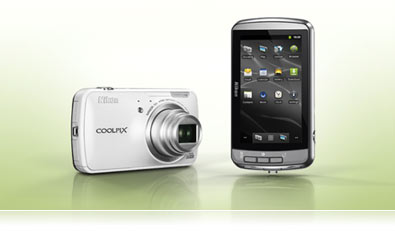
The rumors have been circulating for weeks that Nikon had a new camera in the works and that it would be powered by Google's Android operating system. This morning the company confirmed that those rumors were accurate by officially announcing the Coolpix S800c, a 16-megapixel camera with the heart of a smartphone.

On paper the S800c looks like a solid point and shoot camera that will serve travel needs quite well. Not only does it have a relatively large sensor for this type of camera, but it also packs a 10x optical zoom, a 3.5" OLED touchscreen and it shoots full 1080P videos. It also has WiFi built-in, which when combined with Android allows users to upload images directly to Facebook, Twitter or Flickr while on the go. It'll even allow you to email your photos directly to your friends or wirelessly transfer them to your computer or tablet. GPS functionality allows you to geotag your images, which is becoming an increasingly popular option for travelers in particular.

As you would expect from a camera built by Nikon, the S800c appears to take great photos and solid video as well. But adding Android to the device opens up the possibilities for this camera quite nicely. In theory it should run most apps in the Google Play store, although this is an older version of Android. (Gingerbread 2.1 for my fellow geeks) That means there could be some incompatibilities with newer apps. That said however, this device should be able to run Google Translate, Maps, and other travel friendly apps that could extend its usefulness well beyond just a simple camera.


There are indications that we could see other camera manufacturers using Android to power there devices as well and perhaps one of them will bring a more modern version of the OS to market. For now though Nikon's offering is definitely an interesting experiment that leaves me wondering how consumers will react.

I'm also interested in the battery life on the S800c as Android is a notorious energy hog, particularly in older versions. Nikon says the included battery is good 140 still shots, which quite frankly isn't much when you're out snapping photos all day. That could easily mean that the camera will need to be recharged every day, which is also a lot like a smartphone. Using WiFi and GPS probably will kill that battery even faster.

Despite these misgivings however I'm looking forward to playing with the camera a bit myself. I think the upside to having a camera with the brains of a smartphone could be quite good, especially for frequent travelers. We might even be able to play Angry Birds on it!

The S800c will be available in September for $350.

Update: Here's a promo video of that gives you a better idea of what it looks like and what it can do. Very interesting.


I wrote about this over at Gadling a few days back but thought it was definitely worth mentioning here as well. Nepal has taken the unprecedented move to require all trekkers to hire a guide or porter when trekking inside the country. The decision was announced on the 23rd of July and the new restrictions will go into effect beginning in September.

Solo trekking in Nepal has been a staple of adventure travel for decades and for years it has been a safe country to hike in. But a rise in the number of assaults on the trail and the brutal murder of a Belgian trekker this past June, has spurred the Nepalese government to react. Starting on September 1st, all trekkers will be required to hire a guide or porter to accompany them at all times on the local hiking trails. This was already a requirement for those traveling in groups.

The move isn't expected to have a major impact on Nepal's tourism trade. It is estimated that the cost of a porter or guide will increase the cost of the trip by about $10/day but its value in safety and security goes well beyond that. It is unfortunate that independent travel will no longer be allowed, but it is of the utmost concern for the country that it remains safe for visitors.

When I was in Nepal a few years ago I was traveling as part of a group, so guides and porters were already a requirement. But there were still plenty of trekkers that I encountered who were either there alone or with just a few friends. Those travelers took their time, set their own route and pace and seemed to really be comfortable with the atmosphere. That won't be the case now however and if you've always dreamed of making an independent hike in the Himalaya, you'd better get there soon.

As someone who is fortunate enough to travel on a regular basis I'm always looking for new ways to cut excess weight from my pack and go lighter. Over the years I've actually gotten quite good at packing the minimum amount of gear and taking just the bare essentials that I need on the road. But one area that I continually struggle with is my camera equipment. Obviously I want to document my travels and capture good photos of the places that I visit, but carrying my DSLR and an extra lens or two adds a lot of weight. Sure, you can travel with a good point and shoot, and I usually bring one of them along as well, but there are a lot of circumstances where they just don't perform at the level you need. For that reason I've been considering investing in one of the new mirrorless camera options such as the Nikon 1 series or a Panasonic Lumix G3. These types of cameras fall in between an SLR and a point and shoot, offering you the best elements of both, namely interchangeable lenses in a compact, lightweight form factor.

Up until yesterday there was one big name in the camera industry that was conspicuously absent from the mirrorless market. That was Canon, a company that makes some of the most popular and high quality SLR's on the market. That changed with the announcement of the new EOS M system however, which is the company's first entry in the growing mirrorless arena.

On paper the EOS M brings a lot to the table. The new camera features an 18 megapixel CMOS sensor that is on par with Canon's excellent Rebel T4i and comes with a very nice 3-inch touch screen LCD monitor. It'll shoot 1080p video, is compatible with Canon's EF and EF-S line of lenses (with an optional adapter) and promises fast performance in a variety of lighting conditions. The new camera has it's own specifically designed lens system as well and will ship with a 22mm kit-lens with the option to add a 18-55mm zoom. The body doesn't include a built-in flash, although an optional Speedlite will be available when it hits the market in October. The kit is expected to retail for $800.


In a lot of ways this new offering from Canon is a fantastic entry into the mirrorless market and in others the company is still playing catch-up with competitors. I have no doubt that EOS M will deliver Canon's trademark image quality and performance in a compact package, after all the camera weighs just 9.2 ounces (262 grams). But similar offerings from competitors include many of the same features for less money and have a built-in flash as well. Panasonic, Sony and Olympus are all now several generations into their mirrorless systems and over that past few years they've refined them quite nicely and delivered great performance at a reasonable price.

That said, consumers now have some excellent compact, interchangeable lens systems to choose from and if you're already a Canon user, the fact that you can attach your lenses to the EOS M is a nice selling point. Canon's entry into the market should make for good competition as well, forcing competitors to step up their game further and hopefully bringing prices down.

Why should  you care about the EOS M or any other mirrorless camera? Because they are now getting to the point where they offer DSLR performance in a much smaller body. For those of us who like to travel light that is a very important feature to consider. These systems are a fraction of the weight of their big brothers, but offer image quality that is superior to a point and shoot. We all know how limited weight and space can be on an extended expedition and this type of camera, which can also shoot excellent video, can be a real game changer.

I haven't decided which system I'll personally purchase yet, but I do know it's only a matter of time before I do. I have a feeling I'll enjoy having a DSLR at my disposal for when the demands of trip require it, but on other occasions the lightweight mirrorless option is likely to be next travel companion.

The Google World Wonders website is a fun one for explorers and travelers everywhere. The project uses Google's 360 degree panoramic camera technology to capture both the interiors and exteriors of a number of fantastic locations around the planet and then put it online for all of us to enjoy. The results are Google Street View for some iconic destinations, not to mention a gigantic distraction from our daily lives.

Some of the more interesting locations available include Stonehenge, Versailles, the Swiss Alps and both Yellowstone and Yosemite National Parks. They also have the interior of Robert Falcon Scott's Antarctic hut, which should prove of interest to many readers, as it still contains gear and other artifacts from the British explorers visits to the frozen continent.

If you're looking for the opportunity to travel the world today without ever leaving home, then you'll truly enjoy what Google has put together here. Be warned however, after you've finished strolling along the Banks of the Seine in Paris, you may wonder where your day went.


Back in 2008 Matt Harding became an Internet sensation when he released a video of himself doing a silly little jig in some of the most amazing places around the world. The video entitled "Where the Hell is Matt?" has garnered more than 43 million views and has now generated a sequel. Check out the brand new 2012 edition below. In it you'll see Matt has picked up a few new moves but is still traveling the world with a smile. I'm guessing the video will get you to smile as well. Enjoy!


In addition to my obvious passion for the outdoors, travel and adventure, I also happen to be a bit of a technology and gadget nerd. I tend to stay up on all the latest news and information from the tech industry and I incorporate some of that gear into my daily life and travels. Occasionally a new piece of gear is announced that seems like it could have a revolutionary effect on the way we communicate and get work done while in the field. Earlier this week Microsoft announced a new product that could become very popular with travelers and adventurers alike.

The new product is called the Surface Tablet and it comes in two flavors, the Surface RT and the Surface Pro. The RT is clearly an opportunity for Microsoft to try to compete with the iPad. It features an operating system specifically designed for a touch interface and to use apps in a new environment, known as Metro. The Surface RT will likely be a very competent and easy to use tablet that could potentially be the first real competition to the iPad that we've seen.

But what should be of real interest to many of us is the Surface Pro. This device will actually run a full blown version of Windows 8, which is set to release later this year, and will essentially give you laptop functionality in a tablet casing. The Pro weighs in at a shade under 2 pounds (903 grams), is about a half inch thick (13.5 mm) and comes with a 10.6" full HD display. It also has an Intel Core I5 processor, which is similar to what you'll find in may laptops available today, a USB 2.0 port, micro-SD card reader, and more. Customers will have the option for 64GB or 128GB of onboard storage and and included cover ingeniously converts into a keyboard and touchpad when needed. 
What is most exciting about the Surface Pro is that it will run any piece of software that is available for Windows 8. That means you can get a full version of Office for instance or Photoshop. It can even run games or video editing software, although it remains to be seen how it performs with more intensive programs. The point is that the Pro won't just run apps, although it can do those too, but full versions of the software that you already use to be productive. 

The Surface is built with a unique magnesium casing that should be tough and able to withstand punishment while traveling. That could make it a great companion for those looking for a lightweight, durable and powerful computer to use while they are away for an extended period of time. I could see these being quite popular in base camps around the world for instance, as they are lighter than a laptop but still have plenty of muscle to do most of the things we need to do on the road. 

Despite the rosy outlook for the Surface tablet there are still quite a few questions that need to be answered. For instance, at this point we still don't know anything about the battery life of the device, which is always crucial in any piece of technology that you travel with. Microsoft hasn't given us a release date or price yet either, although both the RT and Pro are expected to come on staggered dates later this fall. The RT is reportedly going to be priced to compete with the iPad, while the Pro will be more inline with an ultrabook laptop. That means that they are likely to be $500 and $1000 respectively. 

Personally I'm looking forward taking one of these Surface tablets for a test run. They have a great design and seem like they'll be a perfect option for road warriors and adventure travelers. The proof will be in the pudding as they say and we won't know if the device will live up the hype until they are released to the real world and we can see how they perform. For now though, this looks like a potentially great new product that will help us stay in touch and chronicle our adventures. We'll know a lot more in the weeks ahead.


At the Teva Mountain Games a few weeks back a company by the name of Trek Light Gear unveiled a new backpack that is sure to be a hit with those who like to go light.

The GearJunkie has the scoop on this interesting little product that is dubbed the "PackBack." The bag, which is made out of parachute nylon, weighs in at just 3 ounces and compresses into its own stuff sack and can easily fit inside of your pants pocket. When its expanded, the bag is said to be able to hold up to 30 pounds although it offers few frills beyond hits packability.

Apparently the pack was a hit at the Mountain Games, as the first run of the product, which retails for $26.95, sold out very quickly. Trek Light doesn't even have any in stock at the moment, and we're told to check back later in the summer when they become available again.

While I wouldn't anticipate this ultralight pack replacing most full featured daypacks, it certainly could come in handy while traveling. Having a tiny piece of gear that instantly becomes a larger pack would be a great addition as far as I'm concerned. Looks like a handy item to have along and I can see where it would be useful in a variety of circumstances.

It is simply amazing how the gear we carry with us on our adventures can have an impact on our enjoyment of those experiences. Visiting destinations that are either very warm or very cold can be incredibly rewarding or complete misery, depending on whether or not you have the right gear. This is especially true when it comes to the clothes we wear, which ultimately decide how comfortable we are when traveling.

Lucky for us we now live in an age when our outdoor and travel apparel is simply the best it has ever been. We now have great fitting, lightweight clothing that is breathable and moisture wicking, all of which helps to keep us more than comfortable while on the go. I was reminded of this fact recently while testing the new LS Tech T Lite from Icebreaker, a company that continues to make fantastic clothing for a variety of activities. 

For those of you who haven't had the good fortune of using Icebreaker gear just yet, you'll definitely want to put them on your radar. The company uses soft merino wool from New Zealand to make shirts, pants, jackets and a variety of other clothing that is designed for hiking, cycling, climbing and travel. Their clothes are good looking, stylish and very comfortable and the Tech T does nothing but enhance that reputation. 

The long-sleeve Tech T is surprisingly lightweight and extremely versatile. The shirt is breathable enough to comfortably wear in warm weather climes, particularly when you're looking to avoid too much exposure to the sun. Alternatively, it makes a fantastic base layer in cool weather as well, adding warm to any layering system. Much of this versatility is due to the merino wool, which naturally excels in a variety of conditions. 

The ability to stay warm or cool as necessary isn't the only trick the Tech T has up its sleeves. Merino wool also happens to have some natural anti-bacterial qualities as well, which means the shirt can resist odors for extended periods of time. In fact, Icebreaker marketing uses the tagline of "Two Weeks. One Shirt. No Stink." I haven't personally had the chance to test the shirt under those conditions, but I can report that I have worn it in a variety of conditions, sweated all over it multiple times, and it has indeed stayed odor free. This is of course great news for backpackers and travelers on extended journeys who like to travel light. Throw one or two of these shirts in your pack and you're good for quite a long time. 

As someone who travels on a regular basis and tries hard to pack as light as possible, I absolutely love this shirt. It is so comfortable that I even wear it while out and about at home. Icebreaker sells the LS Tech T Lite for just $80, which I feel is a bargain for something of this quality. They even have a short sleeve version for $65 for those that prefer that design too. Either way, I think you'll be as impressed as I am and fell that either is a fantastic edition to your Gear Closet. 

According to the Telegraph, China has once again closed the borders to Tibet, barring any foreign travelers from visiting the country. The move comes just a few weeks after two protestors set fire to themselves outside of a temple in Lhasa in protest of Chinese occupation of the Himalaya country and as a new round of unrest is expected there.

Unlike in previous years when Tibet's borders were shut down, this move comes after the busy Himalaya climbing season. But the peak travel season is just about to begin and this move will have an impact on those who hoped to travel there this summer. The popular Saga Dawa festival is also set to begin today, although it seems outsiders won't be participating.

According to several travel companies that book tours to Tibet, the Chinese government has instructed them to stop accepting foreign visitors for an indefinite period of time. That could mean that the disruption of travel in Tibet could last just a few weeks or it could go on for some time.

Unfortunately a large segment of the population there makes its living from tourism and travel. Any disruption means that they will struggle to find work and provide for their families. Lets hope that this closure doesn't last long and that not only will they all be back to work soon, but the travelers who have been dreaming of visiting Tibet will get their opportunity to go there soon as well.

Over the past few weeks I've shared some stories on my recent visit to Jordan, first writing about the history and culture of the place and then following that up with some destinations for adventure. Today I also wrote a piece for Gadling.com on Petra, Jordan's most well known and iconic landmark. The piece is entitled Petra: Beyond The Treasury, because I found that there was far more to see and do there than I had ever imagined.

The ancient city of Petra was originally founded in the 6th Century BC, when it was founded as part of an effort by a tribe of Bedouins known as the Nabataeans. Over the centuries they built up a trade empire and used the city as their capital. Later it was conquered by the Romans and eventually abandoned altogether. As the centuries passed it was all but forgotten, until it was rediscovered by explorer Johann Ludwig in 1812.

Images of the place have always intrigued travelers, who are fascinated by the stone buildings carved directly into the sandstone walls. The best known of those structures is called the Treasury, although in truth it was actually a tomb. As I point out in my story for Gadling, for many people the Treasury is Petra and what they don't realize is that it stands at the entrance of a massive complex of stone structures that can take several days to explore completely.

When I visited the site back in April I was surprised to find so many other ruins there, including a Roman amphitheater, a temple, and dozens of other structures. There was even one ruin known as the Monastery that was every bit as well preserved and impressive as the Treasury, but it is lesser known in part because it sits atop a high plateau that requires a hike up 900 stairs to reach. A similar site, known as the High Place of Sacrifice, is also worth the climb (in this case a mere 700 steps!) as it provides excellent views of the city.

Before I went I already knew that Petra was a wonder, but until I saw it first hand I didn't realize just how impressive it is. Walking through the place is like walking through history and I feel that it is worth visiting Jordan for Petra alone. Obviously there are many more things to do and see in the country, but Petra is, without a doubt, the one destination you shouldn't miss.

Last week I wrote a piece about my recent visit to Jordan, in which I highlighted that country's many historical, cultural and religious attractions. Places like Petra, the Greco-Roman city of Jarash and the biblically important Bethany Beyond the Jordan. Visiting those places can be both inspiring and incredibly humbling at the same time, but after a few days of exploring ancient ruins, I was ready to stretch my legs and enjoy a little adventure. Fortunately, Jordan has plenty of that too. 

The early part of my journey through Jordan was spent in and around the capital city of Amman, which is a vibrant, modern metropolis with a population of more than two million. But a couple of days in and I was ready for some peace and solitude in the desert. Lucky for me our first destination after leaving the city was a quiet eco-lodge called Feynan located to the south.

Feynan is the perfect antithesis of the hustle and bustle of Amman. Quiet and peaceful, the lodge uses solar power to heat water and generate what little electricity that it actually uses. At night, the walkways and guest rooms are lit by candles that give the place a tranquil glow, and the almost exclusively vegetarian meals are made from locally sourced foods. It is all part of Feynan's pledge to have as little of an impact on the environment as possible, and while you're there you may lack for a few amenities, but you'll also never notice. National Geographic called Feynan one of the 50 best ecolodges in the world and  it doesn't take very long understand why. 
As if Feynan wasn't amazing enough on its own, it also happens to sit on the edge of the the Dana Biosphere Reserve, the largest nature reserve in all of Jordan. Dana is nearly 192 sq. km (120 sq. miles) in size and consists of wildly varying landscapes. In the highlands of the Qadisiyah Plateau it reaches an altitude of about 1500 meters (4500 ft) but it also gives way to the sprawling desert flats far below. Sandstone, limestone and granite cliffs abound, and slot canyons slice through the rock, just begging to be explored. 

I had the opportunity to take two hikes while in the area, one at sunset and another at sunrise, and both were spectacular. The red glow of the rising and setting sun cast the area around Feynan in a warm light that was both foreign and familiar at the same time. That light brought the reds, oranges and pinks of the desert alive in a gorgeous kaleidoscope that can't be completely conveyed in photos, but will always stay with me in my mind. It was easily one of the quietest, most peaceful places I've had the opportunity to visit in my travels. 

Unfortunately my stay in Feynan was far too brief and we were on the road once again the next day. But if if I had to pick one place to return to in Jordan, it would likely be here. I'm told that those mysterious canyons offer fantastic trekking and climbing, and that deep inside there are hidden waterfalls and rock formations that few are lucky enough to ever see. I would like to go back and spend a few days just trekking those valleys and enjoying the serene life at the eco-lodge. 

I can't say I was entirely happy to leave the Dana Biosphere behind, but another fantastic destination lay ahead. Located in southernmost Jordan is the Wadi Rum desert, which is another wide-open expanse that broken up by towering sandstone and granite formations. Wadi Rum is another one of Jordan's premiere adventure destinations and visitors looking for a wilderness experience will not go away disappointed. There are trekking and climbing opportunities in abundance and camel safaris offer a unique way to explore the rolling dunes. 

We took in the beauty of Wadi Rum from the back of a couple of 4x4's and spent the better part of the afternoon following in the footsteps of Lawrence of Arabia. There we saw his Seven Pillars of Wisdom and learned how the British officer helped to organize and lead the Arab revolt agains the Ottoman Empire during World War I. Lawrence still casts a large shadow over Jordan, although his myth is not so grand as it is in the West. 

Our drive took us past natural rock bridges, spiraling towers and granite walls that would leave many climbers licking their lips with anticipation. We plowed through deep sands and careened over sand dunes 20 stories high, while soaking up the stark beauty that has made Wadi Rum a favorite destination for travelers. And at the end of the day we stopped at a Bedouin camp that would be our resting spot for the night. That evening we partook in a traditional Bedouin meal, sang songs, danced and smoked the Hookah pipe, while overhead a billion stars twinkled brightly. It was one of the most breathtaking night skies I have ever seen, and well worth a trip deep into the desert alone. 

The next morning a group of us were up at the break of dawn in order to get an entirely different perspective of Wadi Rum. Scrambling into a hot air balloon, we spent the early hours of the day drifting a thousand meters above the desert floor, watching from the perfect vantage point as the suns rays crawled across the landscape below. It was my first time in a hot air balloon, and I found it to be a wonderfully serene experience. When the flame wasn't blasting hot air into the balloon above, we quietly drifted along wherever the wind took us. It was the perfect way to start the day and a reminder of just how vast and beautiful the desert truly was.

Once again, my time in Wadi Rum was far too short and it is yet another Jordanian destination that I would love to return to. Adventurous travelers can actually trek across the desert on foot, camping out beneath the stars each night. If you have the time, that is the way I would recommend seeing this place that has captivated visitors for hundreds of years. 

My visits to the both the Dana Biosphere Reserve and Wadi Rum showed me a completely different side to Jordan than I had seen while visiting its historical wonders. It reaffirmed its standing as a great destination for adventure travelers as well. Trekkers and climbers will find plenty to love in both places, provided they schedule enough time in their itineraries to take it all in. 


The National Geographic Adventure Blog posted an interesting piece today in which they ask some of the world's top outdoor and extreme athletes what their dream travel destination would be. Some of the answers are actually quite good and it is always interesting to hear where these people would go considering that many of them earn a living by visiting remote places on the planet.

There are numerous well known names on the list including the likes of Ed Viesturs, Gretchen Bleiler, Steph Davis, Ueli Steck and many more. Their top destinations includes such far flung places as Nepal, Tibet, Australia and the Swiss Alps. It is actually quite a diverse set of trips albeit ones that are most definitely adventure focused.

Some of the more interesting "dream trips" include Sarah McNair-Landry revealing she'd like to circumnavigate the globe using kites, skis and a sailboat. Polar explorer Will Steger admits he's ready for some warmth and would love to visit the Australian desert, and clearly Ueli Steck and Andrew Skurka have similar thoughts. Ueli says he'd love to go into space while ultra-hiker Skurka wants to trek across the moon.

If you've ever wondered where the adventure crowd goes to get their travel fix, this will definitely be of interest to you. It might even give you some ideas for your next escape as well.

MKRdezign

Contact Form

Name

Email *

Message *

Powered by Blogger.
Javascript DisablePlease Enable Javascript To See All Widget