Halloween Costume ideas 2015

Digital archives contain as usually understood by professional archivists and historians.

Articles by "Technology"
2009 accessibility Aconcagua Administration Adventure Racing Adventure Travel Adventurists Advice Afghanistan Africa Alaska Alberto Contador Aleutian Islands Alex Honnold Alps Amazon Amherst Amherst Destinations Amherst Hikes Andes Android 1.5 Android 1.6 Android 2.0 Android 2.1 Android 2.2 Android 2.3 Android 2.3.3 Android 3.0 Android 3.2 Android 4.0 Android Design Android Developer Challenge Android Developer Phone Android Market Animals Animation and Graphics Annapurna Announcements Antarctic App Components App Resources Apps Archeology Arctic Arctic Ocean Argentina Art Asia Atacama Desert Atlantic Ocean August Australia Authentication Autumn Aviation Backpacking Backyard Nature Badwater Ultra Baffin Island Baltic Sea BASE Jumping Beach Belchertown Belchertown Destinations Belchertown Hikes Berkshires Best Practices Bhutan Blogging Tips Blogs Book Review Boots Boston Botswana Brazil Broad Peak California Camping Canada Canyoneering Carstensz Pyramid Catatan Puspitasari Central America Central Massachusetts Checkpoint Tracker Children Chile China Cho Oyu Cinta Wanita Circumnavigation Clay Climate Change Climbing Clothing Code Day Colorado Colrain Congo River Connecticut Connectivity Conservation Area Contests Cool Stuff Craft Cycling Dashboard Dave Cornthwaite Death Valley Debugging Denali Developer Console Developer Days Developer Labs Developer profiles Dhaulagiri Dinosaurs Discovery Channel Dolomites Earth Day Easter Island Easthampton Ed Viesturs Educational Eiger El Capitan Endurance Sports Environmental Erving Europe Events Everest Expedition Exploration Explorers Club Fair Fairy House Farm Film Festival Finland Fireworks Fish Hatchery Fitz Roy Food Fourth of July France Free Games Gasherbrum Gaya Hidup Wanita Gear General Adventure Gestures Giro d'Italia Gobi Desert Google I/O Google Play Google Play services Goshen GPS Granby Grand Canyon Greater Boston Greenland Grossology Exhibit Guidelines Hadley Hadley 350th Half Dome Hang Gliding Hawaii Health Hikes Under One Mile Hiking Himalaya History Holyoke Honduras Horse How-to Hubungan Hunting Ice Cream IME impossible2Possible Independence Day India Indoor info Info Seminar Input methods Intents Internet Interview io2010 Italy Japan JNI John Muir Trail Jordan July June Jungfrau K2 K7 Kalahari Kangchenjunga Karakoram Kayaking Kilimanjaro Lake Michigan Lance Armstrong Layout Leadville 100 Leverett Lhotse Libraries Lintas Peristiwa Location Location and Sensors London Long Riders Ludlow Maine Makalu Manaslu Maple Massachusetts Matterhorn Media and Camera Mendon Meru Peak Mexico Mini Golf Mississippi River Missouri River Mongolia Monson Mont Blanc Motivasi Mount Elbrus Mount Everest Mount Rainier Mountain Biking Mountain View Mountaineering Movies Mt. Shasta Munich Museums Music Nameless Tower Namibia Nanga Parbat NASA National Geographic Nature Navigation NDK Nepal New Hampshire New Zealand Newburyport North America North Pole Northampton Northfield Norway Novelet Nuptse Nusantara Nutrition Ocean Okavango Delta Olympics Open source OpenGL ES Optimization Oregon Orizaba Outdoor Outdoor Retailer Outside Magazine Pacific Ocean Packs Paddling Pakistan Palmer Panduan SEO Parade Paragliding Patagonia Pelham Peru Petting Zoo Photography Playground Plum Island Poland Pool Pottery Pumpkins Quabbin Reservoir Quality Quick Search Box Rafting Rahasia Wanita Ray Zahab Reggio Emilia Research Resources Review Road Rally Rowing Roz Savage Running Sailing Sample code Sandbox School Science Scuba Diving SDK updates Sensors September Seven Summits Shelburne Falls Shisha Pangma Shutesbury Silk Road Site News Skateboarding skiing Skydiving Slacklining Sleeping Bags Snowboarding Solstice South Africa South America South Deerfield South Georgia South Hadley South Natick South Pacific South Pole Southern Ocean Space Speech Input Springfield Stand Up Paddling Storytime Strawberries Sturbridge Summer Summer Camp Summit Sunderland Survival Sutton Swimming Switzerland Tanzania Technology Tel Aviv Tents Testing Teva Mountain Games Text and Input Text-to-Speech Thrifty Tibet Torres Del Paine Touch Tour d'Afrique Tour de France Tour Divide Tower Trail Running Train Trango Towers TransRockies Travel Trekking Triathlon Turkey Turner's Falls Tutorial Ueli Steck Ultra Running Ultramarathon UMass United States USA Pro Cycling Challenge User Interface Utah Vancouver Vermont Video Wadi Rum Wakhan Wanita dan Bisnis Water Websites Western Massachusetts Westhampton Widgets Wildlife Williamstown Wingsuits Winter Wisconsin Worcester World Championship Wyoming Yemen Yosemite Zoo

A few weeks back I positively reviewed the Guide 10 Plus Adventure Kit from Goal Zero, calling it the best option for charging gadgets while traveling in the backcountry. But that kit isn't the only option when it comes to solar charging while on the go and for adventure travelers looking for a more compact solution there a variety of options available. Take for example the Classic2 from Solio, which is a solid update to their original Classic model and a viable alternative for those who prefer to travel light.

The Classic2 manages to wrap three small solar panels into a compact design that collapses down very nicely for storing in your backpack. When you need it to collect sunlight for charging the built-in 3200 mAh battery, the three solar cells slide open like the pedals of a flower, drawing in as much light as possible. The device also includes both a micro and standard sized USB port. The former is used to charge the battery via computer or the included wall adapter, while the latter is used for charging your gadgets.

The addition of the full size USB port is one of the improvements over the original Solio Classic that was released a few years back. That solar charger came with a set of proprietary adapters which weren't exactly convenient to carry along when traveling. The standard USB port ensures the Classic2 will work with nearly any device out of the box, including smartphones, rechargeable headlamps, cameras, GPS devices and so on. Other improvements include a higher capacity battery, a thinner overall design and larger solar panels.

All of those design options add up to a far more efficient and useful charger. The Solio Classic2 is now capable of completely recharging my iPhone a total of about three times and it can do it much more quickly as well. A full charge took roughly two hours to complete, which isn't a whole lot different from plugging it directly into the wall.


The Classic2 is also much faster at charging it's own batteries using the sun, although it is obviously slower than the Goal Zero, which has much larger and more efficient solar cells. Solio says it takes about six hours to fully charge the internal battery, but I found that it varied greatly depending on exposure to the light. In my tests, it was not uncommon for a recharge to take eight or even ten hours, although it was a more consistent and steady process compared to the original Classic.

It should be noted that the Classic2 is capable of recharging a device like the iPad, but those tablets have large batteries and it will completely drain Solio's little charger before you get your iPad completely topped off. It isn't a bad option to extend the battery life of Apple's slate but it's just don't expect it to work miracles either.

For travelers looking for a solar charger to help keep their gadgets powered while away from a more traditional power source, the Solio Classic2 is an excellent option. It will definitely extend the life of your favorite tech toys without adding a lot of undue bulk to your pack. This diminutive solar charger weighs just 10.1 ounces (286 grams) and costs just $100. That makes it a cheap but useful travel companion that you won't want to leave home without.

Just in time for the start of the impending ski season, Zeal Optics is introducing a new set of goggles that come equipped with a camera built right in. The new iON HD Camera goggles are capable of capturing both 1080p and 720p video and can take 8 megapixel still images. An in-goggle viewfinder helps you to know exactly what you're shooting at any given time and the oversized buttons make the iON easy to control even while wearing gloves. Videos and images can be easily edited and shared on Facebook, Twitter and social networks as well, so you can brag to your friends about your best powder days.

The 3-hour battery life doesn't sound all that great for long days on the slopes, but this does seem like a fun option for making ski and snowboard videos. The goggles run $399, which is a bit on the expensive side. Particularly when you can buy a GoPro HDHero 2 for less money and it would be far more versatile of a system.

Then again, these are some great looking goggles.

v

Looking for a compact, yet rugged, wireless speaker system to take on your next backpacking trip? Then look no further than the new Turtle Shell Boombox from Outdoor Tech. This powerful little sound system connects wirelessly to your smartphone or tablet via BlueTooth and pumps out your favorite tunes, podcasts or streaming audio. It is also water resistant, dust and shock proof, and designed to be mounted just about anywhere. It even comes with built-in camera threading, which means it can be mounted on tripods or a variety of other items quickly and easily. It comes with a built-in rechargeable lithium-ion battery that provides 9-10 hours of use and will make a good travel companion for those who need a little entertainment around the campfire.

Outdoor Tech is currently running a Kickstarter campaign to raise funding for the Turtle Shell. They're hoping to get about $40,000 in donations before they go into production. With just under two weeks to go in the campaign, they still have to generate a bit more than $20,000. To get there, they're providing some nice incentives for those who contribute, including selling the Turtle Shell for just $99. When it hits retail, the unit will run $149, so if you're interested, this is a great way to grab one at a discounted price.

Click here to find  out more and check out the video below. Looks like a rugged travel companion for those who enjoy listening to their music on the go.


The technology that we carry with us into the field today continues to get more powerful, sophisticated and useful, enabling us to be more productive and stay in contact where ever we go. Whether its smartphones, GPS devices, tablets, mp3 players or some other gadget, keeping those devices powered can still be a real challenge. After all, all of that technology is simply dead weight without a way to refill the battery. That's where Goal Zero can offer some assistance. The company makes some of the lightest, most versatile solar panels available today and after putting their Guide 10 Plus Adventure Kit to the test, I now understand where GZ's reputation for making quality products comes from.

The Adventure Kit comes with everything you need to keep all of your devices well charged while on the go. it includes the Guide 10 battery pack with USB port for storing a charge, a 12V cigarette adapter, a 4-pack of AA rechargeable batteries, a rechargeable LED flashlight and all the cables you need to power up your gizmos. But the heart of the kit is Goal Zero's Nomad 7 Solar Panel, which is capable of generating up to 7 watts of power. That makes it a more powerful option than GZ's competitors while still remaining compact and lightweight enough to carry anywhere.

When fully opened, the Nomad 7 provides two surprisingly large panels for collecting energy from the sun and it can put that energy to good use. Goal Zero says that the average smartphone, GPS device or digital camera will take between 2 and 4 hours to charge and in my testing of the kit I found that to be accurate. My iPhone 4S was fully topped out in a little more than 2 hours and my point and shoot digital cameras varied from 2-4 depending on battery size. My DSLR took a bit longer, closer to 4 hours, but it still did the job nicely. The Guide 10 will even charge an iPad, although it does take considerably longer, particularly for the iPad 3 with its larger battery. An iPad 1 or 2 requires more than a full cycle from the battery pack to completely charge, which I did overnight. I found it more efficient to top off the third generation iPad more regularly however, not letting it run completely down.


Thin and lightweight, the Goal Zero solar panels are surprisingly rugged. GZ understands that we not only need to have something that can generate plenty of power for our gadgets but it also must be able to withstand lots of punishment too. The Nomad 7 panels are built to be taken on anything from a weekend camping trip to a months long expedition to the remote corners of the planet. Top to bottom, this is a solid kit that can be used where ever we travel and with just about any device that we take along with us.

While testing the Guide 10 Plus Adventure Kit I used the system in two ways. First, I connected to my backpack and allowed it to collect sunlight while hiking all day. The other way I test it was in a permanent campsite where I simply laid it out flat to collect sunlight all day long. Not surprisingly, the kit performed the best while stationary, as it was exposed to a consistent amount of sun throughout the day. But that isn't always an option and I found that the Nomad 7 worked efficiently even while dangling from my pack, although it did take longer to top off the charge in the Guide 10 battery pack.

Anyone who ventures off the beaten path but still needs to be able to power their gadgets will find the Goal Zero Guide 10 Plus a fantastic option. It isn't the most compact of solar kits in this price range and class, but it is easily the most powerful that I've used. The Adventure Kit costs $159.99 and includes a handy carrying case to keep the entire system organized. Personally, I feel this is a great bargain considering all that is included with this kit and how versatile it actually is. If you consistently need power while off the grid, this is by far your best option.

Over the past couple of years the iPad has become the one piece of technology that I can't leave home without. When I travel it is my portable communications and entertainment system, providing movies, music, books, magazines, games and more. It is my lightweight, portable workstation, as well as a photo and video editing machine. In short, it is quite possibly the most important item I take with me on the road.

While Apple's tablet is a solid, well built device, there are times when I can't help but wonder if it's a good idea to take it to the far ends of the Earth. Since it's release in the spring of 2010, I've taken my iPad to Everest Base Camp, deep into the African Bush, and to the remote Atacama Desert, just to name a few. To help protect my favorite gadget, I've used several different cases to help keep my iPad safe. Each of them has brought a measure of security to the table, but none have been as rugged and secure as the new 1065 HardBack Case from Pelican.

Designed specifically to accommodate most 10" tablets, the 1065 HardBack is like having an impenetrable shell to keep your gadget safe and sound even under the most extreme conditions. The case is crush-proof, water resistant up to 3 feet in depth and features automatic pressure equalization to keep the contents safe at any altitude. The thick, durable plastic housing provides a great sense of security no matter where you're traveling.


The HardBack isn't just tough on the outside however as the interior provides plenty of protection as well. A foam liner keeps the all important screen safe and sound, while a water proof gasket seals the interior from not only water but excess dust too. A rugged, yet easy to open, latch locks tight and remains firmly closed even while taking plenty of abuse.

Using Pelican's hard case is akin to having luggage specifically designed to protect your iPad. It is a the perfect product for those who need to carry their tablet with them into the backcountry and wrapped in this rugged armor, they can rest assured that there device will be well taken care of. It comes with Pelican's lifetime guarantee and with an MSRP of $49 it is a bit on the high end of iPad cases but considering the level of protection it provides, the cost is actually quite affordable.

The only knock I have on the HardBack is that it is a bit on the heavy side. Weighing in at 1.25 pounds (567 grams) this case isn't exactly a featherweight. Those looking to travel light may pass on Pelican's protective armor in favor of something that is a bit leaner, although they'll almost certainly be giving up some measure of protection. But if you value your iPad the way I do, and you need it with you when you travel, the extra weight is worth it.

The competition in the "action camera" market continues to heat up as new cameras are introduced to consumers. We recently had both Sony and JVC announce new offerings as they attempt to knock GoPro off their perch as the most recognizable option amongst buyers. But there are other contenders for the crown and some of them have been around for quite awhile too. Take for example Contour, who for my money has always been on the cutting edge of new features and options. Today the company has announced their new Contour+2 camera which delivers a host of great new functionality to users.

The Contour+2 retains the rugged metal housing, 1080p video quality and excellent glass lens from previous generations but has been updated with a host of new technology that makes it even easier to use. The camera features integrated GPS for geotagging still images and video, Bluetooth connectivity for connecting to an iPhone or iPad and the ability to record at an astounding 120 frames per second. It also comes with a waterproof housing and a simplified instant-on switch that keeps it shooting at all times. Best of all, the camera's sensor has been improved to give it better image quality while also allowing users more control over white balance, sharpness and other important settings.

Contour was one of the first companies to use mobile apps for iOS and Android to control their cams and they've added some new features in that arena as well. The iOS app has already been updated and the Android version will be soon. That gives users the ability to not only review the video being shot remotely via Bluetooth but now they can also control it from a distance as well, instructing the camera on when to start and stop recording. The app also allows for the tweaking of the cameras settings to get the best shot possible. This remote functionality really opens the door for filmmakers to do more with their Contour camera.


Another change to the Contour+2 is its ability to now overlay GPS data right onto the video. Previous versions of the camera could record that data as well, but it required the use of Contour's proprietary software to make it all work. Now it can simply be embedded right in the video, allowing users to record things like speed, altitude and course and display it over their footage. The effect is especially great when used while the camera is mounted to a helmet when snowboarding or mountain biking as the data overlay adds a lot to the experience.

Overall, Contour has a nice update to their camera system here and they managed to cut the price while still adding more features. The Contour+2 now runs $399 – $100 less than last year's model. That is a bit more expensive than some of the competitors out there, but I'm not sure anyone else has all of the features that this camera has straight out of the box. All in all, I see this is a good bargain for anyone interested in making action/outdoor adventure films.


Last week I posted some information on a newly announced Coolpix S800c camera from Nikon that is powered by the Android mobile operating system. The same OS commonly found in a number of different smartphones. Today, Samsung announced their own Android camera that has some welcome and distinct differences from Nikon's offering.

Both the S800c and the new Samsung Galaxy Camera feature 16-megapixel sensors but their similarities pretty much end there. Samsung slapped a 4.8 inch HD touchscreen on the back of their device, stretching it form edge-to-edge in the process. That's considerably larger than the 3.5 inch OLED screen found on the S800c. That's not all however, as Samsung also managed to squeeze in a 21x zoom, far more useful than the 10x lens found on Nikon's new toy. And while Nikon saw fit to choose an older version of Android (Gingerbread 2.1), Samsung is powering it's device with Android 4.1, AKA Jellybean. It even has simple voice-control options, allowing you to instruct the camera to "zoom" or "shoot" simply by using your voice. That could come in handy for solo travelers looking to take some self-portraits.

Those specs are just the tip of the iceberg however. Samsung also mixed in a 1.4Ghz quad-core processor to power this beast and added both WiFi and 3G or 4G networking depending on the model. That means you'll be able to share your photos while on the go, uploading them directly to Facebook, Twitter or a laptop without the use of a cable. Photographers will even be able to edit their images directly on the Galaxy Camera using special Android apps designed just for that purpose.

The new camera is due to hit the market in the fourth quarter of this year and prices have yet to be announced.

This looks like an interesting new option in what could be a new niche for cameras. By making these cameras "smart," consumers are getting some new options that they've never had before. While I'm not personally looking to add one of these to my arsenal of cameras, it will certainly be interesting to see how they evolve.


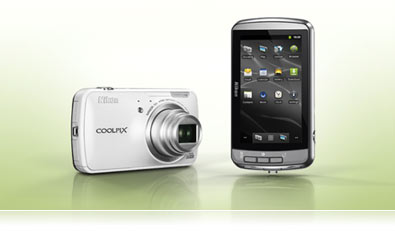
The rumors have been circulating for weeks that Nikon had a new camera in the works and that it would be powered by Google's Android operating system. This morning the company confirmed that those rumors were accurate by officially announcing the Coolpix S800c, a 16-megapixel camera with the heart of a smartphone.

On paper the S800c looks like a solid point and shoot camera that will serve travel needs quite well. Not only does it have a relatively large sensor for this type of camera, but it also packs a 10x optical zoom, a 3.5" OLED touchscreen and it shoots full 1080P videos. It also has WiFi built-in, which when combined with Android allows users to upload images directly to Facebook, Twitter or Flickr while on the go. It'll even allow you to email your photos directly to your friends or wirelessly transfer them to your computer or tablet. GPS functionality allows you to geotag your images, which is becoming an increasingly popular option for travelers in particular.

As you would expect from a camera built by Nikon, the S800c appears to take great photos and solid video as well. But adding Android to the device opens up the possibilities for this camera quite nicely. In theory it should run most apps in the Google Play store, although this is an older version of Android. (Gingerbread 2.1 for my fellow geeks) That means there could be some incompatibilities with newer apps. That said however, this device should be able to run Google Translate, Maps, and other travel friendly apps that could extend its usefulness well beyond just a simple camera.


There are indications that we could see other camera manufacturers using Android to power there devices as well and perhaps one of them will bring a more modern version of the OS to market. For now though Nikon's offering is definitely an interesting experiment that leaves me wondering how consumers will react.

I'm also interested in the battery life on the S800c as Android is a notorious energy hog, particularly in older versions. Nikon says the included battery is good 140 still shots, which quite frankly isn't much when you're out snapping photos all day. That could easily mean that the camera will need to be recharged every day, which is also a lot like a smartphone. Using WiFi and GPS probably will kill that battery even faster.

Despite these misgivings however I'm looking forward to playing with the camera a bit myself. I think the upside to having a camera with the brains of a smartphone could be quite good, especially for frequent travelers. We might even be able to play Angry Birds on it!

The S800c will be available in September for $350.

Update: Here's a promo video of that gives you a better idea of what it looks like and what it can do. Very interesting.


Good news for travelers to remote locations in the U.S. and beyond. Immarsat announced today that they are delivering options for pre-paid satellite phone service on a global scale by providing the service in the U.S. for the first time. This means that sat phone users no longer have enter into costly contracts for a service that they only need to use on an occasional basis. The new pre-paid plans will be available starting September 1.

This is a great option for anyone who travels into remote areas and wants to have a satellite phone along for safety purposes. In the past these phones were not always cost effective for the backpacker or climber who only needed the service a few times a year. The pre-paid plans include both voice and data, which allows for Internet access in the backcountry as well. The service will extend to Immarsat's IsatPhone Pro, BGAN data modemFleetBoradband and FleetPhone options.

Immarsat has offered pre-paid services prior to this announcement but those options have not included the United States before. The expanded service opens that market as well and brings pre-paid to a global level. Sat phones are now a viable option for those of us who would like to have one with us on our travels but found them cost prohibitive in the past.

As someone who is fortunate enough to travel on a regular basis I'm always looking for new ways to cut excess weight from my pack and go lighter. Over the years I've actually gotten quite good at packing the minimum amount of gear and taking just the bare essentials that I need on the road. But one area that I continually struggle with is my camera equipment. Obviously I want to document my travels and capture good photos of the places that I visit, but carrying my DSLR and an extra lens or two adds a lot of weight. Sure, you can travel with a good point and shoot, and I usually bring one of them along as well, but there are a lot of circumstances where they just don't perform at the level you need. For that reason I've been considering investing in one of the new mirrorless camera options such as the Nikon 1 series or a Panasonic Lumix G3. These types of cameras fall in between an SLR and a point and shoot, offering you the best elements of both, namely interchangeable lenses in a compact, lightweight form factor.

Up until yesterday there was one big name in the camera industry that was conspicuously absent from the mirrorless market. That was Canon, a company that makes some of the most popular and high quality SLR's on the market. That changed with the announcement of the new EOS M system however, which is the company's first entry in the growing mirrorless arena.

On paper the EOS M brings a lot to the table. The new camera features an 18 megapixel CMOS sensor that is on par with Canon's excellent Rebel T4i and comes with a very nice 3-inch touch screen LCD monitor. It'll shoot 1080p video, is compatible with Canon's EF and EF-S line of lenses (with an optional adapter) and promises fast performance in a variety of lighting conditions. The new camera has it's own specifically designed lens system as well and will ship with a 22mm kit-lens with the option to add a 18-55mm zoom. The body doesn't include a built-in flash, although an optional Speedlite will be available when it hits the market in October. The kit is expected to retail for $800.


In a lot of ways this new offering from Canon is a fantastic entry into the mirrorless market and in others the company is still playing catch-up with competitors. I have no doubt that EOS M will deliver Canon's trademark image quality and performance in a compact package, after all the camera weighs just 9.2 ounces (262 grams). But similar offerings from competitors include many of the same features for less money and have a built-in flash as well. Panasonic, Sony and Olympus are all now several generations into their mirrorless systems and over that past few years they've refined them quite nicely and delivered great performance at a reasonable price.

That said, consumers now have some excellent compact, interchangeable lens systems to choose from and if you're already a Canon user, the fact that you can attach your lenses to the EOS M is a nice selling point. Canon's entry into the market should make for good competition as well, forcing competitors to step up their game further and hopefully bringing prices down.

Why should  you care about the EOS M or any other mirrorless camera? Because they are now getting to the point where they offer DSLR performance in a much smaller body. For those of us who like to travel light that is a very important feature to consider. These systems are a fraction of the weight of their big brothers, but offer image quality that is superior to a point and shoot. We all know how limited weight and space can be on an extended expedition and this type of camera, which can also shoot excellent video, can be a real game changer.

I haven't decided which system I'll personally purchase yet, but I do know it's only a matter of time before I do. I have a feeling I'll enjoy having a DSLR at my disposal for when the demands of trip require it, but on other occasions the lightweight mirrorless option is likely to be next travel companion.

Tablets are all the rage these days, although most of them haven't been able to come close to performing nearly as well as the iPad. That could change down the line as Microsoft introduces its Surface tablet  in a few months, but for now the only thing that comes close is the new Nexus 7 from Google. It runs the latest version of Android (code named: Ice Cream Sandwich), is lightweight, durable, provides great performance and is priced right. It seems like a fantastic device for travel, even if you're headed to the most remote places.

Yesterday Google released their first commercial for the Nexus 7 and I felt it was just too fun not to share. It shows a father and son who go on a camping trip and take their shiny new tablet along for the trip with them. It does a great job of showing off everything that this technology can bring to the table for travelers and adventurers alike.


The Google World Wonders website is a fun one for explorers and travelers everywhere. The project uses Google's 360 degree panoramic camera technology to capture both the interiors and exteriors of a number of fantastic locations around the planet and then put it online for all of us to enjoy. The results are Google Street View for some iconic destinations, not to mention a gigantic distraction from our daily lives.

Some of the more interesting locations available include Stonehenge, Versailles, the Swiss Alps and both Yellowstone and Yosemite National Parks. They also have the interior of Robert Falcon Scott's Antarctic hut, which should prove of interest to many readers, as it still contains gear and other artifacts from the British explorers visits to the frozen continent.

If you're looking for the opportunity to travel the world today without ever leaving home, then you'll truly enjoy what Google has put together here. Be warned however, after you've finished strolling along the Banks of the Seine in Paris, you may wonder where your day went.


Yesterday we got our first sneak peek at the new action cam from Sony and today we get word that JVC is getting into the game as well. The difference is that we know a lot more about JVC's offering, which looks to pack a lot of features into a tiny casing.

The new JVC ADIXXION Camcorder (Marketing people come with the best names!) weighs in at just 4.5 ounces (127 grams) and is waterproof to five meters, able to shrug off a fall of up to two meters, and is dust and freeze-proof as well. That means, unlike some of its competitors, you won't need to purchase separate housing for basic operation.

The camera features a 1.5-inch LCD screen, built-in image stabilization and WiFi. Additionally it can shoot full 1080p HD video at 30 fps, or 720p at 60 fps. The camera's built in 5MP CMOS sensor will capture decent still images as well and it's ultra-wide angle lens should capture a lot of action. The camera is capable of shooting time lapse recordings, has a self-timer and a 5x digital zoom.

The press release for the ADIXXION says that the WiFi feature will allow the camera to connect to smartphones for an external monitor and can attach to a PC for wirelessly transferring data as well. Perhaps most interestingly of all, the camera is capable of streaming live, high definition video in real time to USTREAM without the use of a PC. Apps for Android and iOS will be available at time of release too.

Seems like a pretty powerful little device and I can't wait to see how it performs. JVC says it'll be available later this summer starting at $349.95. Seems pretty reasonable for what you get and I can see how these could potentially be used in a lot of different situations.

Looks like GoPro and Contou  are about to have some new competition in the action/helmet cam market. Yesterday Sony gave us the first look at their entry into that space, which features image stabilization technology, an ultra-wide angle Carl Zeiss lens and rugged build construction designed to take punishment in the field.

Aside from that, not much else is known about the device at the moment. Sony has said that it will offer  waterproof and ruggedized housings for the camera, which doesn't even have a name yet. They were a bit light on the technical specs, simply saying that it will offer "super high-quality video," which I'm assuming translates into 1080p HD. Price and release date remain a mystery as well, although it is being shown off at a major camera conference in New York this week.

Sony's entry into the action cam market shows how big that market actually has come. A few years ago these types of cameras were mostly a novelty, shooting blurry video of our adventures. Now they've matured greatly and they not only have great image quality but a host of other technology that has made them much more useful. GoPro and the other action cam companies have been doing some amazing things in their recent iterations, and Sony is going to have to come strong if they want to break into this space.

Still, it is always great to have another option, particularly when it comes form a big company with an established track record. Looking forward to checking this out myself.

In addition to my obvious passion for the outdoors, travel and adventure, I also happen to be a bit of a technology and gadget nerd. I tend to stay up on all the latest news and information from the tech industry and I incorporate some of that gear into my daily life and travels. Occasionally a new piece of gear is announced that seems like it could have a revolutionary effect on the way we communicate and get work done while in the field. Earlier this week Microsoft announced a new product that could become very popular with travelers and adventurers alike.

The new product is called the Surface Tablet and it comes in two flavors, the Surface RT and the Surface Pro. The RT is clearly an opportunity for Microsoft to try to compete with the iPad. It features an operating system specifically designed for a touch interface and to use apps in a new environment, known as Metro. The Surface RT will likely be a very competent and easy to use tablet that could potentially be the first real competition to the iPad that we've seen.

But what should be of real interest to many of us is the Surface Pro. This device will actually run a full blown version of Windows 8, which is set to release later this year, and will essentially give you laptop functionality in a tablet casing. The Pro weighs in at a shade under 2 pounds (903 grams), is about a half inch thick (13.5 mm) and comes with a 10.6" full HD display. It also has an Intel Core I5 processor, which is similar to what you'll find in may laptops available today, a USB 2.0 port, micro-SD card reader, and more. Customers will have the option for 64GB or 128GB of onboard storage and and included cover ingeniously converts into a keyboard and touchpad when needed. 
What is most exciting about the Surface Pro is that it will run any piece of software that is available for Windows 8. That means you can get a full version of Office for instance or Photoshop. It can even run games or video editing software, although it remains to be seen how it performs with more intensive programs. The point is that the Pro won't just run apps, although it can do those too, but full versions of the software that you already use to be productive. 

The Surface is built with a unique magnesium casing that should be tough and able to withstand punishment while traveling. That could make it a great companion for those looking for a lightweight, durable and powerful computer to use while they are away for an extended period of time. I could see these being quite popular in base camps around the world for instance, as they are lighter than a laptop but still have plenty of muscle to do most of the things we need to do on the road. 

Despite the rosy outlook for the Surface tablet there are still quite a few questions that need to be answered. For instance, at this point we still don't know anything about the battery life of the device, which is always crucial in any piece of technology that you travel with. Microsoft hasn't given us a release date or price yet either, although both the RT and Pro are expected to come on staggered dates later this fall. The RT is reportedly going to be priced to compete with the iPad, while the Pro will be more inline with an ultrabook laptop. That means that they are likely to be $500 and $1000 respectively. 

Personally I'm looking forward taking one of these Surface tablets for a test run. They have a great design and seem like they'll be a perfect option for road warriors and adventure travelers. The proof will be in the pudding as they say and we won't know if the device will live up the hype until they are released to the real world and we can see how they perform. For now though, this looks like a potentially great new product that will help us stay in touch and chronicle our adventures. We'll know a lot more in the weeks ahead.


MKRdezign

Contact Form

Name

Email *

Message *

Powered by Blogger.
Javascript DisablePlease Enable Javascript To See All Widget