Halloween Costume ideas 2015

Digital archives contain as usually understood by professional archivists and historians.

Articles by "National Geographic"
2009 accessibility Aconcagua Administration Adventure Racing Adventure Travel Adventurists Advice Afghanistan Africa Alaska Alberto Contador Aleutian Islands Alex Honnold Alps Amazon Amherst Amherst Destinations Amherst Hikes Andes Android 1.5 Android 1.6 Android 2.0 Android 2.1 Android 2.2 Android 2.3 Android 2.3.3 Android 3.0 Android 3.2 Android 4.0 Android Design Android Developer Challenge Android Developer Phone Android Market Animals Animation and Graphics Annapurna Announcements Antarctic App Components App Resources Apps Archeology Arctic Arctic Ocean Argentina Art Asia Atacama Desert Atlantic Ocean August Australia Authentication Autumn Aviation Backpacking Backyard Nature Badwater Ultra Baffin Island Baltic Sea BASE Jumping Beach Belchertown Belchertown Destinations Belchertown Hikes Berkshires Best Practices Bhutan Blogging Tips Blogs Book Review Boots Boston Botswana Brazil Broad Peak California Camping Canada Canyoneering Carstensz Pyramid Catatan Puspitasari Central America Central Massachusetts Checkpoint Tracker Children Chile China Cho Oyu Cinta Wanita Circumnavigation Clay Climate Change Climbing Clothing Code Day Colorado Colrain Congo River Connecticut Connectivity Conservation Area Contests Cool Stuff Craft Cycling Dashboard Dave Cornthwaite Death Valley Debugging Denali Developer Console Developer Days Developer Labs Developer profiles Dhaulagiri Dinosaurs Discovery Channel Dolomites Earth Day Easter Island Easthampton Ed Viesturs Educational Eiger El Capitan Endurance Sports Environmental Erving Europe Events Everest Expedition Exploration Explorers Club Fair Fairy House Farm Film Festival Finland Fireworks Fish Hatchery Fitz Roy Food Fourth of July France Free Games Gasherbrum Gaya Hidup Wanita Gear General Adventure Gestures Giro d'Italia Gobi Desert Google I/O Google Play Google Play services Goshen GPS Granby Grand Canyon Greater Boston Greenland Grossology Exhibit Guidelines Hadley Hadley 350th Half Dome Hang Gliding Hawaii Health Hikes Under One Mile Hiking Himalaya History Holyoke Honduras Horse How-to Hubungan Hunting Ice Cream IME impossible2Possible Independence Day India Indoor info Info Seminar Input methods Intents Internet Interview io2010 Italy Japan JNI John Muir Trail Jordan July June Jungfrau K2 K7 Kalahari Kangchenjunga Karakoram Kayaking Kilimanjaro Lake Michigan Lance Armstrong Layout Leadville 100 Leverett Lhotse Libraries Lintas Peristiwa Location Location and Sensors London Long Riders Ludlow Maine Makalu Manaslu Maple Massachusetts Matterhorn Media and Camera Mendon Meru Peak Mexico Mini Golf Mississippi River Missouri River Mongolia Monson Mont Blanc Motivasi Mount Elbrus Mount Everest Mount Rainier Mountain Biking Mountain View Mountaineering Movies Mt. Shasta Munich Museums Music Nameless Tower Namibia Nanga Parbat NASA National Geographic Nature Navigation NDK Nepal New Hampshire New Zealand Newburyport North America North Pole Northampton Northfield Norway Novelet Nuptse Nusantara Nutrition Ocean Okavango Delta Olympics Open source OpenGL ES Optimization Oregon Orizaba Outdoor Outdoor Retailer Outside Magazine Pacific Ocean Packs Paddling Pakistan Palmer Panduan SEO Parade Paragliding Patagonia Pelham Peru Petting Zoo Photography Playground Plum Island Poland Pool Pottery Pumpkins Quabbin Reservoir Quality Quick Search Box Rafting Rahasia Wanita Ray Zahab Reggio Emilia Research Resources Review Road Rally Rowing Roz Savage Running Sailing Sample code Sandbox School Science Scuba Diving SDK updates Sensors September Seven Summits Shelburne Falls Shisha Pangma Shutesbury Silk Road Site News Skateboarding skiing Skydiving Slacklining Sleeping Bags Snowboarding Solstice South Africa South America South Deerfield South Georgia South Hadley South Natick South Pacific South Pole Southern Ocean Space Speech Input Springfield Stand Up Paddling Storytime Strawberries Sturbridge Summer Summer Camp Summit Sunderland Survival Sutton Swimming Switzerland Tanzania Technology Tel Aviv Tents Testing Teva Mountain Games Text and Input Text-to-Speech Thrifty Tibet Torres Del Paine Touch Tour d'Afrique Tour de France Tour Divide Tower Trail Running Train Trango Towers TransRockies Travel Trekking Triathlon Turkey Turner's Falls Tutorial Ueli Steck Ultra Running Ultramarathon UMass United States USA Pro Cycling Challenge User Interface Utah Vancouver Vermont Video Wadi Rum Wakhan Wanita dan Bisnis Water Websites Western Massachusetts Westhampton Widgets Wildlife Williamstown Wingsuits Winter Wisconsin Worcester World Championship Wyoming Yemen Yosemite Zoo

With the fall now upon us in the northern hemisphere, and the winter season looming ahead, its time to start thinking about the gear we'll need to ensure that we stay comfortable on all of our outdoor excursions. Thankfully, our friends over at National Geographic Adventure are always happy to share a few suggestions and with that in mind, yesterday they announced their selections for the 2012 Fall/Winter Gear of the Year Awards. As usual, the list is filled with fantastic gear that any outdoor enthusiast would love to have. Each of the items brings something new to the table and it is tough to decide exactly which ones to spend your hard earned cash on.

One of the more intriguing products that earned a place on the Nat Geo list is a pair of ski/snowboard goggles from Smith Optics that include a built-in heads up display that shows speed, location, altitude, temperature and a whole lot more. We've seen similar units in the past but a new developer kit is allowing programers to create new uses for these kinds of displays, which when connected to your smartphone via BlueTooth can do some amazing things.

Other interesting products include Mountain Hardwear's new Ghost Whisperer down jacket, reportedly the lightest of its kind at just under eight ounces (226 grams). It isn't the only jacket on the list however, as Sierra Design's Gnar Lite is lauded for its use of new waterproof down fill. The Big Agnes McAlpin SL sleeping bag incorporates a competing type of waterproof down to provide plenty of warmth and comfort on backpacking trips and Garmin's Fenix GPS enabled watch is also given a nod for its mix of good looks and functionality. BioLite's Stove continues to garner plenty of attention for its ability to cook your meal while recharging your iPhone as well and I felt that it was one of the more revolutionary products that I saw at Outdoor Retailer in August.

This is just a sample of the products that made the cut on Nat Geo's Gear of the Year list. There are also skis, boots, and more apparel that will be of interest as you prepare for the cooler seasons ahead. Just be warned, some of these items come with a hefty price tag, although when has that ever stopped us from picking up the best gear possible?

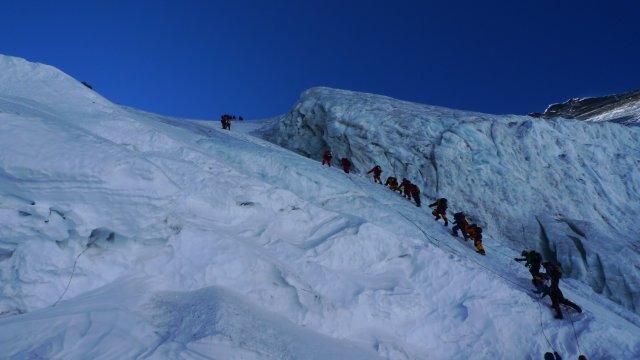
This past spring Mark Jenkins was part of the National Geographic/North Face climbing team on Everest. That group of climbers originally had their sights on the West Ridge but thanks to some unusual weather, which included drier and colder than normal conditions, the team abandoned that approach and went up the standard South Col route instead. Jenkins, along with his his teammates, reached the summit, and he is currently putting together a story about the climb for National Geographic magazine. That story isn't due until 2013, but Nat Geo Adventure managed to catch up with Jenkins recently and posted an interview on their blog.

In the article Jenkins talks about how crowded Everest has become since guided expeditions started to become popular in the 1990's. He also discusses ways that the climb could be safer and advocates requiring those attempting the world's highest peak first earn some experience and skills on another Himalayan mountain. Mark also shares his thoughts on keeping Everest cleaner, pondering why "Leave No Trace" isn't the de facto standard for climbers.

Mark touches on the mainstream view of Everest and how the non-climber sees it as the "ultimate trophy" in the climbing world. He says that there will always be people who want to test their skills on the mountain and therefore it could always be crowded, but in the mountaineering community it is looked on a bit more skeptically. Everest is seen as a "very surreal experience" according to Jenkins.

It's a good interview with a man who isn't afraid to share his thoughts on the annual spring circus that is Mt. Everest. I had the chance to hear Mark speak as part of a panel at Outdoor Retailer a few weeks back and made some very interesting points. He pointed out that there are in the neighborhood of about 15 routes to the summit of Everest and yet each year everyone crowds into the two main routes instead. Mark rightfully pointed out that there is still plenty to do on the mountain, but most climbers don't really want to risk exploring one of the lesser known routes when they can join the stampede to the top along the usual paths.

If you're an Everest fan, you'll definitely want to read what he has to say in this story. Can't wait to read his full article in NG mag next year.

A few days ago the National Geographic Adventure Blog posted a story that shared some good tips for recognizing, preventing and treating some of the adverse effects of altitude. Those tips come courtesy of the National Outdoor Leadership School (NOLS), whose members know a thing or two about dealing with altitude.

The article first discusses the six factors that have a direct affect on whether or not you'll suffer altitude sickness. Those include things like rate of ascent, amount of altitude gained, hydration and so on. It also does a good job of breaking down the various types of altitude sickness including AMS (acute mountain sickness), HAPE (high altitude pulmonary edema) and HACE (high altitude cerebral edema). Symptoms of each are listed as are ways of treating them, although we all know that the best way to address the problem is by going to lower altitude.

Hiking and climbing in the mountains is one of the most rewarding outdoor activities I know, but if you go high enough, anyone can have issues with the altitude. Even if you've safely been there before without any issues you can still experience any of the three types of sickness listed above. Knowing how to recognize those symptoms and address them is an important part of safety in the mountains.


National Geographic will host a "Evening of Exploration" event tonight to honor two famous explores that have gone to the opposite ends of the Earth. The organization will posthumously present it's highest honor, the Hubbard Medal, to Swiss oceanographer Jacques Piccard and name Austrian mountaineer Gerlinde Kaltenbrunner its Explorer of the Year.

Piccard, who died in 2008, is best known for diving into the depths of the Mariana Trench, along with Don Walsh, back in 1960. The duo were the first to travel seven miles below the surface of the ocean, into the Challenger Deep, to explore the floor of the Pacific. That feat wouldn't be repeated for another 52 years, when James Cameron did it a few months back. Cameron and Walsh, who received the medal in 2010, will join Nat Geo CEO John Fahey in presenting the award to Piccard's family.

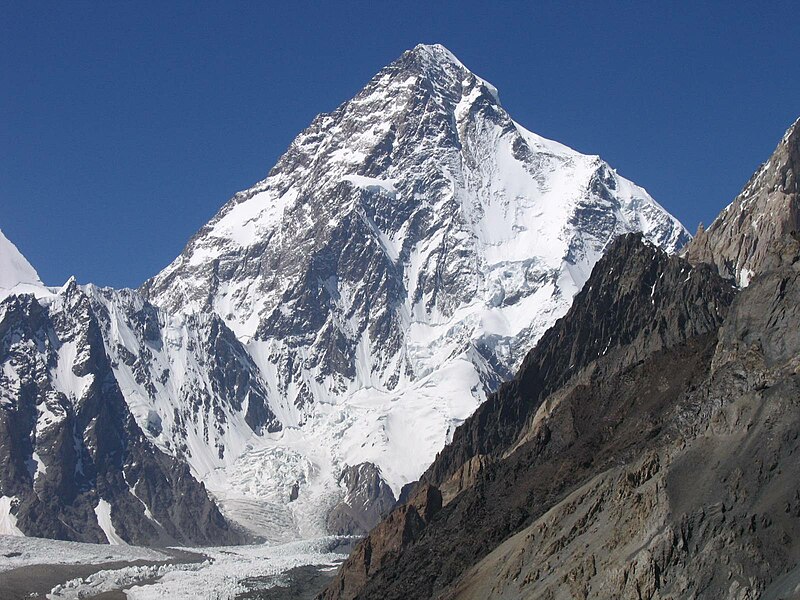
Kaltenbrunner, who is no stranger to readers of this blog, is being honored for her climbing efforts on the world's tallest peaks. Last year she became the first woman to summit all fourteen 8000 meter peaks without supplemental oxygen when she topped out on K2. It took her 13 years to accomplish this feat and along the way she has been a great role model for other climbers, men and women. She'll receive the Explorer of the Year award from last year's winner, Kenny Broad, along with a specially engraved Rolex Explorer timepiece. Rolex is the sponsor for evening's festivities.

Congratulations to the family of Jacques Piccard and to Gerlinde on these much deserved honors. For more information about Piccard, Gerlinde and the Evening of Exploration click here.

National Geographic has announced it's 2012 class of Emerging Explorers with 15 individuals being singled out for their unique contributions to their particular fields. The Emerging Explorer designation is given out on an annual basis to some of the best and brightest individuals who are breaking new ground while still in the early stages of their career, and it comes with a $10,000 award to assist them in their research.

Some of the amazing men and women who earned that distinction this year include underwater archaeologist Guillermo de Anda, who explores submerged caverns for remnants of the Mayan civilization, and Daniel Raven-Ellison, who is a so-called Guerrilla Geographer. Daniel uses unique and creative methods to get people to think more about the world around them. They're joined on the list by chemist Yu-Guo Guo, who has invented a more efficient way to power electric cars, and Krithi Karanth, a biologist who studies human-wildlife interaction in India.

As usual, the list of Emerging Explorers is diverse and impressive. Everyone on the list is doing interesting and important work that has the potential to shape our planet in the years to come. Simply reading about what these men and women are up to is very inspiring and thought provoking to say the least.

To check out the entire group of 2012 Emerging Explorers, click here.

It is an unusual time on Everest to say the least. Weather conditions continue to cause problems and teams are struggling to decide what they should do. The season has been a strange one to say the least and the dry conditions on the mountain are threatening to bring a premature end to the season.

First, an update on Corey Richards. As you'll recall, the photographer/filmmaker was climbing as part of the National Geographic/North Face expedition on the West Ridge when he took ill last week. After being evacuated from the mountain he flew back to Kathmandu where he underwent a battery of tests that determined what ever it was that made him sick, it wasn't the altitude. He is feeling much better now, but without a better understanding of why he had issues breathing, he has decided to play it safe and go home. I'm sure he's very disappointed, and what this means for the expedition as a whole has yet to be seen, but this was the best decision possible all things considered.

Meanwhile, back up in Base Camp, his teammates are resting and undergoing tests of their own. A team of doctors from the Mayo Clinic are there taking reading on the how altitude effects the health of climbers and studying what it does to our over all physiology. Their research could help provide important clues about how we acclimatize and respond to altitude. No word yet on when the Nat Geo team will attempt to head up the mountain again.

Other teams are unsure of if or when that will happen as well. The Himex squad has put their expedition "on hold" while they evaluate the risks of climbing the mountain. Team leader Russell Brice feels that conditions aren't good at the moment because it is so dry that it is making climbing much more challenging and unsafe, particularly as teams head up above Camp 2. Brice describes the rock fall on the Lhotse Face as "relentless" and says that he doesn't want to put his climbers, guides, or Sherpas in danger. The only way that face will improve however is if the mountain receives snow and ice in the days ahead, which doesn't seem likely.

According to the Peak Freaks, the team leaders had a meeting yesterday to discuss these issues a feelings were decidedly mixed. Team leader Tim Ripple says that it isn't completely doom and gloom there, although he admits their going to need a "perfect mix" of snow and temperatures. He also laments the fact that climate change is having a noticeable effect on Everest as the snows and glaciers have retreated steadily over the years.

The report from the International Mountain Guides camp seems a bit more upbeat. They say that it is not unusual for conditions to be on the dry side early in the season and that May often brings more snow and ice to the mountain. They also report that the Sherpas fixing the ropes have numerous bags of rope in place in Camp 2 and just above the Yellow Band, and they are prepared to continue to build the route when conditions improve enough to allow them to do that. High winds are keeping everyone down low at the moment, but when the window opens, the Sherpas are ready to go.

This weekend should prove interesting on Everest. Hopefully the winds will die down and bring some snow to help stabilize the route. If not, we could be facing one of the most dangerous climbing seasons on the mountain in some time. Hopefully everyone going up and down the peak, from both sides of the mountain, will play it safe.

The National Geographic Adventure Blog posted an interesting piece today in which they ask some of the world's top outdoor and extreme athletes what their dream travel destination would be. Some of the answers are actually quite good and it is always interesting to hear where these people would go considering that many of them earn a living by visiting remote places on the planet.

There are numerous well known names on the list including the likes of Ed Viesturs, Gretchen Bleiler, Steph Davis, Ueli Steck and many more. Their top destinations includes such far flung places as Nepal, Tibet, Australia and the Swiss Alps. It is actually quite a diverse set of trips albeit ones that are most definitely adventure focused.

Some of the more interesting "dream trips" include Sarah McNair-Landry revealing she'd like to circumnavigate the globe using kites, skis and a sailboat. Polar explorer Will Steger admits he's ready for some warmth and would love to visit the Australian desert, and clearly Ueli Steck and Andrew Skurka have similar thoughts. Ueli says he'd love to go into space while ultra-hiker Skurka wants to trek across the moon.

If you've ever wondered where the adventure crowd goes to get their travel fix, this will definitely be of interest to you. It might even give you some ideas for your next escape as well.

MKRdezign

Contact Form

Name

Email *

Message *

Powered by Blogger.
Javascript DisablePlease Enable Javascript To See All Widget