Halloween Costume ideas 2015

Digital archives contain as usually understood by professional archivists and historians.

Articles by "Sailing"
2009 accessibility Aconcagua Administration Adventure Racing Adventure Travel Adventurists Advice Afghanistan Africa Alaska Alberto Contador Aleutian Islands Alex Honnold Alps Amazon Amherst Amherst Destinations Amherst Hikes Andes Android 1.5 Android 1.6 Android 2.0 Android 2.1 Android 2.2 Android 2.3 Android 2.3.3 Android 3.0 Android 3.2 Android 4.0 Android Design Android Developer Challenge Android Developer Phone Android Market Animals Animation and Graphics Annapurna Announcements Antarctic App Components App Resources Apps Archeology Arctic Arctic Ocean Argentina Art Asia Atacama Desert Atlantic Ocean August Australia Authentication Autumn Aviation Backpacking Backyard Nature Badwater Ultra Baffin Island Baltic Sea BASE Jumping Beach Belchertown Belchertown Destinations Belchertown Hikes Berkshires Best Practices Bhutan Blogging Tips Blogs Book Review Boots Boston Botswana Brazil Broad Peak California Camping Canada Canyoneering Carstensz Pyramid Catatan Puspitasari Central America Central Massachusetts Checkpoint Tracker Children Chile China Cho Oyu Cinta Wanita Circumnavigation Clay Climate Change Climbing Clothing Code Day Colorado Colrain Congo River Connecticut Connectivity Conservation Area Contests Cool Stuff Craft Cycling Dashboard Dave Cornthwaite Death Valley Debugging Denali Developer Console Developer Days Developer Labs Developer profiles Dhaulagiri Dinosaurs Discovery Channel Dolomites Earth Day Easter Island Easthampton Ed Viesturs Educational Eiger El Capitan Endurance Sports Environmental Erving Europe Events Everest Expedition Exploration Explorers Club Fair Fairy House Farm Film Festival Finland Fireworks Fish Hatchery Fitz Roy Food Fourth of July France Free Games Gasherbrum Gaya Hidup Wanita Gear General Adventure Gestures Giro d'Italia Gobi Desert Google I/O Google Play Google Play services Goshen GPS Granby Grand Canyon Greater Boston Greenland Grossology Exhibit Guidelines Hadley Hadley 350th Half Dome Hang Gliding Hawaii Health Hikes Under One Mile Hiking Himalaya History Holyoke Honduras Horse How-to Hubungan Hunting Ice Cream IME impossible2Possible Independence Day India Indoor info Info Seminar Input methods Intents Internet Interview io2010 Italy Japan JNI John Muir Trail Jordan July June Jungfrau K2 K7 Kalahari Kangchenjunga Karakoram Kayaking Kilimanjaro Lake Michigan Lance Armstrong Layout Leadville 100 Leverett Lhotse Libraries Lintas Peristiwa Location Location and Sensors London Long Riders Ludlow Maine Makalu Manaslu Maple Massachusetts Matterhorn Media and Camera Mendon Meru Peak Mexico Mini Golf Mississippi River Missouri River Mongolia Monson Mont Blanc Motivasi Mount Elbrus Mount Everest Mount Rainier Mountain Biking Mountain View Mountaineering Movies Mt. Shasta Munich Museums Music Nameless Tower Namibia Nanga Parbat NASA National Geographic Nature Navigation NDK Nepal New Hampshire New Zealand Newburyport North America North Pole Northampton Northfield Norway Novelet Nuptse Nusantara Nutrition Ocean Okavango Delta Olympics Open source OpenGL ES Optimization Oregon Orizaba Outdoor Outdoor Retailer Outside Magazine Pacific Ocean Packs Paddling Pakistan Palmer Panduan SEO Parade Paragliding Patagonia Pelham Peru Petting Zoo Photography Playground Plum Island Poland Pool Pottery Pumpkins Quabbin Reservoir Quality Quick Search Box Rafting Rahasia Wanita Ray Zahab Reggio Emilia Research Resources Review Road Rally Rowing Roz Savage Running Sailing Sample code Sandbox School Science Scuba Diving SDK updates Sensors September Seven Summits Shelburne Falls Shisha Pangma Shutesbury Silk Road Site News Skateboarding skiing Skydiving Slacklining Sleeping Bags Snowboarding Solstice South Africa South America South Deerfield South Georgia South Hadley South Natick South Pacific South Pole Southern Ocean Space Speech Input Springfield Stand Up Paddling Storytime Strawberries Sturbridge Summer Summer Camp Summit Sunderland Survival Sutton Swimming Switzerland Tanzania Technology Tel Aviv Tents Testing Teva Mountain Games Text and Input Text-to-Speech Thrifty Tibet Torres Del Paine Touch Tour d'Afrique Tour de France Tour Divide Tower Trail Running Train Trango Towers TransRockies Travel Trekking Triathlon Turkey Turner's Falls Tutorial Ueli Steck Ultra Running Ultramarathon UMass United States USA Pro Cycling Challenge User Interface Utah Vancouver Vermont Video Wadi Rum Wakhan Wanita dan Bisnis Water Websites Western Massachusetts Westhampton Widgets Wildlife Williamstown Wingsuits Winter Wisconsin Worcester World Championship Wyoming Yemen Yosemite Zoo

I've said it before, and I'll know doubt say it again. Our world is a pretty amazing place. The most recent example that I've seen of that is the video below which was shot off South Africa by explorer Mike Horn and photographer Chase Jarvis. While sailing there they came across a "super-pod" of dolphins that swarmed around their ship. There are literally dozens of them and it is quite a beautiful site.

The story of Ernest Shackleton's Endurance expedition is one of the most legendary tales of survival in the history of mankind. When his ship became stuck in Antarctic pack-ice, and was eventually crushed and sank, Shackleton and his crew were forced to survive out on the ice for months on end. The crew endure difficult weather conditions, supply shortages and daring open water crossings in a desperate attempt to stay alive. Eventually, Shackleton himself led a small team in search of help to South Georgia Island, where he and his men used their remaining strength to cross the island on foot, a feat that wouldn't be matched again for another 40 years. All told, the Shackleton and his men managed to survive for more than 16 months before being rescued, and it was testament to their leader that not a single member of the crew lost their life.

Shackleton's expedition began in 1914, so in the coming months you can expect numerous celebrations of the 100th anniversary of the launch of the expedition, which had originally intended to cross the length of Antarctica, via the South Pole, for the first time. There will no doubt be a number of centenary expeditions to celebrate the occasion. Most of those expeditions won't be open to you and I, but one travel company is offering a unique opportunity for adventurous folks looking to follow in Shackleton's footsteps – provided they have plenty of spare cash.

Intrepid Travel's Shackleton Epic is a 56-day journey that traces the same route as the legendary British explorer. It gets underway on January 3rd, 2013 when the TS Pelican sets sail from Punta Arenas, Chile. The ship will explore the Southern Ocean, visiting such places as Deception Island, King George Island, Elephant Island and of course, South Georgia, before eventually finishing in Rio de Janeiro in late February. Along the way, the crew, led by British/Australian explorer Tim Jarvis, will recreate Shackleton's 800-mile open water crossing between Elephant Island and South Georgia aboard a replica boat no less. Upon their completion of that undertaking, there will also be an opportunity to cross the island on foot, just as Shackleton had.


While this itinerary is being offered by one of the best adventure travel companies in the world, this is far from a typical trip. This will be a long and demanding journey that will test those who embark on it. But it is also the chance to trace the path of one of the greatest explorers of the 20th century and catch a glimpse of how difficult Shackleton's adventure must have been.

There are just ten berths available aboard the Pelican and they don't come cheap. If you're interested in joining the crew, the price is $30,000 with reservations being taken now. You can find out more specific information about the expedition, the ship you'd be sailing on, and leader Tim Jarvis by clicking here.

Now if only I could come up with the $30k to join this excursion.

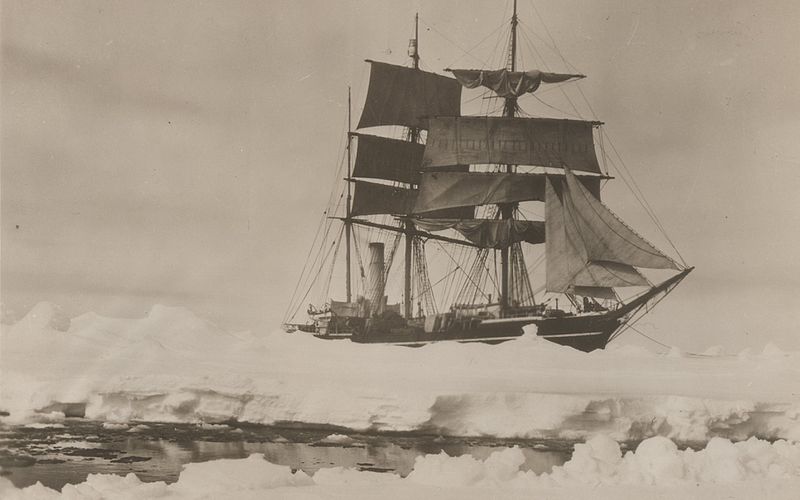
The SS Terra Nova holds a hallowed place in the history of exploration. The ship was used by Robert Falcon Scott on his ill fated mission to Antarctica that lasted from 1910-1912 and ended with his death on the return trip from the South Pole. After that the vessel was bought and commissioned for other types of service which eventually led to it running supplies to Greenland during World War II. In 1943 it hit thick ice and took damage to her hull, causing the ship to sink in the icy waters of the North Atlantic, never to be seen again. That is until now.

A research vessel for the Schmidt Ocean Institute was recently testing new equipment off the coast of Greenland when they came across the wreckage. Unsure of what they had found, the team took the opportunity to explore their discovery further by sending a submersible camera down to examine the ship more closely. The camera took images of the Terra Nova which were then compared to historical photos which confirmed the identity of the vessel.

Built in 1884, the Terra Nova was first used as a whaling and sealing vessel. In 1903 she was put to work as an expedition vessel under Scott, who sailed the ship into the Antarctic where her reinforced hull was perfectly suited for duty. Scott would take her back to the Antarctic seven years later when he made his bid for the South Pole. While Scott and his men were making their way to 90ºS, the Terra Nova and her crew were conducting scientific research off the coast of the frozen continent and making supply runs back to New Zealand.

Following Scott's death, the ship was sold to new owners who put her back to work at a seal fishery in Newfoundland. By 1942 the vessel had been pressed into service as a supply ship to Greenland and a year later it was sunk off the south-western tip of that country. She still sits there today, although the discovery of the ship will certainly be of interest to history buff and fans of explorers like Scott.

It would be amazing if the ship could be recovered and possibly added to a museum somewhere. But it seems that the Terra Nova incurred quite a bit of damage when she went down and now rests 1000 feet beneath the surface. It would be very expensive to try to recover the vessel, which could potentially fall apart if moved. So, she'll probably stay in her current location forever, a sunken monument to history long past.

I can't help but think that it is quite serendipitous that the Terra Nova was discovered exactly 100 years after the Scott expedition.

There is absolutely no denying that technology has had a dramatic impact on our way of life, both for good and for ill. Thanks to our ever-growing reliance on gadgets, we now lead lives that keep us constantly connected to friends, family, work and the world at large. Those gadgets have brought a lot of convenience to our everyday lives, but they have also made things so easy that we sometimes forget what life was like without them. That's why this next story is such a compelling one.

Later this week a crew of 24 Māori sailors from New Zealand will set out on a grand adventure. The group will depart from their homeland and attempt to sail 10,000 nautical miles (18,520 km) to Easter Island, one of the most remote places on the planet. That in and of itself has the potential to be a grand adventure, but these men will make that journey without the use of a GPS or any kind of navigational maps or charts. They don't even intend to bring a compass, something unheard of in the days of modern ocean exploration.

For centuries the Polynesian people sailed the South Pacific without those conveniences however and this group will rely on the ancient methods of their forefathers to reach their destination. According to the expedition website, the team will instead use their knowledge of the movement of the stars, the sun and moon and ocean currents to help them locate Easter Island, a tiny speck of land in the middle of the Pacific Ocean.

Navigating through traditional means isn't enough of a challenge for these two-dozen individuals however as they'll also be making the journey aboard two double-hulled sailing canoes that are not unlike what their ancestors would have used to explore the islands of the South Pacific. According to the expedition website, there is no record of a voyage like this one ever being undertaken and its success could shed new light on how the Polynesian people spread out across the ocean.

You can follow the expedition through both Twitter and Facebook, as well as Google+. It looks like they are in the final stages of preparation now and should be leaving sometime on Friday.

Thanks to CuChullaine of the Long Riders Guild for sharing this story with me. Simply amazing!

Australian adventurer Tim Jarvis has announced a major expedition that will follow in the footsteps of one of the greatest polar explorers in history – Ernest Shackleton. In January of next year, Jarvis will depart for the Antarctic where he will attempt to recreate what is considered by many to be the greatest survival story of all time. The journey will be a challenging, demanding one that hasn't been successfully replicated in nearly 100 years.

For those unaware of Shackleton's story, while he was exploring the Antarctic in January of 1915 his ship, the Endurance, became trapped in the pack ice. He and his crew used it as their shelter and store house for months as they waited for weather conditions to improve enough to free it from the ice, but before that could happen the ship's hull was breached and it began to take on water. In October, Shackleton and his men abandoned the Endurance for good, electing to build camps on the ice floes. They hoped that they ice would drift towards one of the nearby islands, allowing them to reach land and access supply caches, but after another five months they were no closer to dry ground and the ice floes started to break up. In a desperate move, the crew took to three life boats and headed for open water and after five days out on the freezing Southern Ocean that reached the desolate and remote Elephant Island. It was the first time they were on land in nearly 500 days.

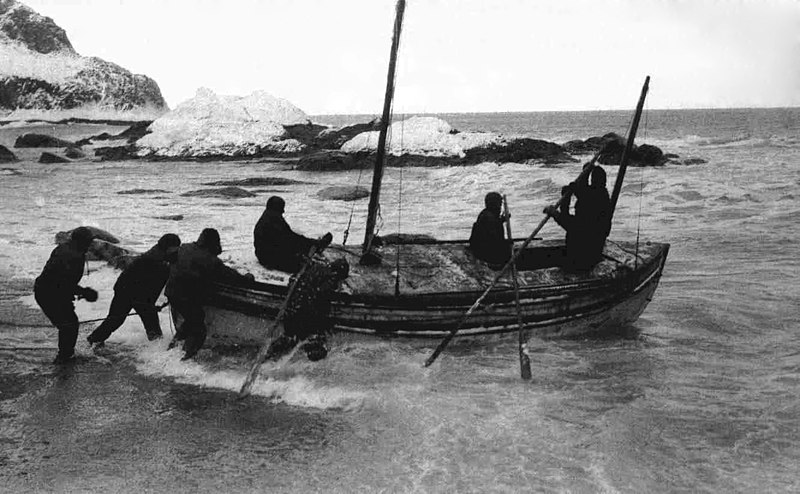
Elephant Island was hardly a permanent refuge however and Shackleton knew he had to go for help. On April 24, 1916, he and a small group of men set out across treacherous waters for South Georgia Island, some 800 miles away. They went in a small boat dubbed the James Caird after one of the more generous sponsors of the expedition and all onboard knew that this was a one way trip. But somehow they managed to cross those 800 miles and land on South Georgia, although they were still miles from rescue. Shackleton and two of his men then crossed the island, covering 32 miles in 36 hours, along an unknown route, to reach a whaling station where they found help at last. A ship was eventually dispatched to retrieve the men still stranded on Elephant Island, which took some time due the ice, but they were all rescued and in the end, not a single life was lost, which makes the story all the more amazing.

The next successful crossing of South Georgia by foot wouldn't come until 1955, which gives you an idea of how challenging this undertaking was, and no one has ever managed to complete both the boat journey and the crossing. Next year, Tim Jarvis will attempt to do just that.

In preparation for the expedition Jarvis has had a replica of the James Caird built and he and his crew will use vintage 1916 gear along the way. They will attempt to first complete the 800 mile crossing from Elephant Island to South Georgia by sea and then traverse the island along the same route that Shackleton did. It will be a tremendous undertaking and the entire journey will be filmed for an upcoming documentary to celebrate the 100 anniversary of Shackleton's adventure.

You can read more about what promises to be an amazing expedition on the official website.

Shackleton's story has always been a fascinating one. He and his men suffered for months in some of the harshest conditions on the planet. But they managed to survive. Every one of them. It was a bold and hardy group to say the least, and none more so than their leader. Jarvis' expedition has a lot to live up to and it will be fascinating to see how he and his team fare.

Thanks to Lisa for sharing this inspiring story. Can't wait to see how it all plays out.

MKRdezign

Contact Form

Name

Email *

Message *

Powered by Blogger.
Javascript DisablePlease Enable Javascript To See All Widget