Halloween Costume ideas 2015

Digital archives contain as usually understood by professional archivists and historians.

Articles by "Exploration"
2009 accessibility Aconcagua Administration Adventure Racing Adventure Travel Adventurists Advice Afghanistan Africa Alaska Alberto Contador Aleutian Islands Alex Honnold Alps Amazon Amherst Amherst Destinations Amherst Hikes Andes Android 1.5 Android 1.6 Android 2.0 Android 2.1 Android 2.2 Android 2.3 Android 2.3.3 Android 3.0 Android 3.2 Android 4.0 Android Design Android Developer Challenge Android Developer Phone Android Market Animals Animation and Graphics Annapurna Announcements Antarctic App Components App Resources Apps Archeology Arctic Arctic Ocean Argentina Art Asia Atacama Desert Atlantic Ocean August Australia Authentication Autumn Aviation Backpacking Backyard Nature Badwater Ultra Baffin Island Baltic Sea BASE Jumping Beach Belchertown Belchertown Destinations Belchertown Hikes Berkshires Best Practices Bhutan Blogging Tips Blogs Book Review Boots Boston Botswana Brazil Broad Peak California Camping Canada Canyoneering Carstensz Pyramid Catatan Puspitasari Central America Central Massachusetts Checkpoint Tracker Children Chile China Cho Oyu Cinta Wanita Circumnavigation Clay Climate Change Climbing Clothing Code Day Colorado Colrain Congo River Connecticut Connectivity Conservation Area Contests Cool Stuff Craft Cycling Dashboard Dave Cornthwaite Death Valley Debugging Denali Developer Console Developer Days Developer Labs Developer profiles Dhaulagiri Dinosaurs Discovery Channel Dolomites Earth Day Easter Island Easthampton Ed Viesturs Educational Eiger El Capitan Endurance Sports Environmental Erving Europe Events Everest Expedition Exploration Explorers Club Fair Fairy House Farm Film Festival Finland Fireworks Fish Hatchery Fitz Roy Food Fourth of July France Free Games Gasherbrum Gaya Hidup Wanita Gear General Adventure Gestures Giro d'Italia Gobi Desert Google I/O Google Play Google Play services Goshen GPS Granby Grand Canyon Greater Boston Greenland Grossology Exhibit Guidelines Hadley Hadley 350th Half Dome Hang Gliding Hawaii Health Hikes Under One Mile Hiking Himalaya History Holyoke Honduras Horse How-to Hubungan Hunting Ice Cream IME impossible2Possible Independence Day India Indoor info Info Seminar Input methods Intents Internet Interview io2010 Italy Japan JNI John Muir Trail Jordan July June Jungfrau K2 K7 Kalahari Kangchenjunga Karakoram Kayaking Kilimanjaro Lake Michigan Lance Armstrong Layout Leadville 100 Leverett Lhotse Libraries Lintas Peristiwa Location Location and Sensors London Long Riders Ludlow Maine Makalu Manaslu Maple Massachusetts Matterhorn Media and Camera Mendon Meru Peak Mexico Mini Golf Mississippi River Missouri River Mongolia Monson Mont Blanc Motivasi Mount Elbrus Mount Everest Mount Rainier Mountain Biking Mountain View Mountaineering Movies Mt. Shasta Munich Museums Music Nameless Tower Namibia Nanga Parbat NASA National Geographic Nature Navigation NDK Nepal New Hampshire New Zealand Newburyport North America North Pole Northampton Northfield Norway Novelet Nuptse Nusantara Nutrition Ocean Okavango Delta Olympics Open source OpenGL ES Optimization Oregon Orizaba Outdoor Outdoor Retailer Outside Magazine Pacific Ocean Packs Paddling Pakistan Palmer Panduan SEO Parade Paragliding Patagonia Pelham Peru Petting Zoo Photography Playground Plum Island Poland Pool Pottery Pumpkins Quabbin Reservoir Quality Quick Search Box Rafting Rahasia Wanita Ray Zahab Reggio Emilia Research Resources Review Road Rally Rowing Roz Savage Running Sailing Sample code Sandbox School Science Scuba Diving SDK updates Sensors September Seven Summits Shelburne Falls Shisha Pangma Shutesbury Silk Road Site News Skateboarding skiing Skydiving Slacklining Sleeping Bags Snowboarding Solstice South Africa South America South Deerfield South Georgia South Hadley South Natick South Pacific South Pole Southern Ocean Space Speech Input Springfield Stand Up Paddling Storytime Strawberries Sturbridge Summer Summer Camp Summit Sunderland Survival Sutton Swimming Switzerland Tanzania Technology Tel Aviv Tents Testing Teva Mountain Games Text and Input Text-to-Speech Thrifty Tibet Torres Del Paine Touch Tour d'Afrique Tour de France Tour Divide Tower Trail Running Train Trango Towers TransRockies Travel Trekking Triathlon Turkey Turner's Falls Tutorial Ueli Steck Ultra Running Ultramarathon UMass United States USA Pro Cycling Challenge User Interface Utah Vancouver Vermont Video Wadi Rum Wakhan Wanita dan Bisnis Water Websites Western Massachusetts Westhampton Widgets Wildlife Williamstown Wingsuits Winter Wisconsin Worcester World Championship Wyoming Yemen Yosemite Zoo

Explorer and anthropologist Julian Monroe Fisher is the subject of an excellent interview over at Explorers Web this week. Julian is gearing up for the second phase of his Great African Expedition, which will get underway in December, and in the two-part interview he shares a lot about that adventure and the world of exploration in particular.

In Part One of the interview the explorer talks in some detail about Phase 2, which follows his successful journey from Cairo to Khartoum along the Nile River. That section of the expedition was completed in May of this year and progress was halted because of an ongoing dispute over oil rights between Sudan and the newly formed South Sudan. In December, Julian will resume the expedition by traveling from the South Sudan capital of Juba up the Nile and overland to Lake Albert, which he intends to circumnavigate by kayak, indigenous long canoe and on foot.

In that same article, Monroe Fisher talks about the recent attack of Davey du Plessis in the Amazon and his own brushes with conflict in Africa. Julian says his only real assault actually took place at home in Austria and now while traveling for miles on foot through the African bush.

Part Two of the interview continues the discussion with Julian sharing his thoughts on how he prepares for his journeys through potentially dangerous parts of the world. He also talks about the interesting tribes that he has encountered along the way and tells us what it was like to meet, and interview,  Jane Goodall. He also tells us why he is so drawn to Africa, a continent that I love dearly as well.

ExWeb's interview with Julian is a good one and if you want to read about a modern day explorer who is out in the field, following in the footsteps of other great explorers, I suggest you take a look. It is definitely an interesting read.

Last week I wrote a post about NASA's successful landing of the Curiosity Rover on Mars. Following touchdown, the robotic explorer first had to undergo a series of system checks to make sure everything was fully operational. After that an updated software package was sent to Curiosity that should improve performance over the course of its two-year life mission, which is to search for signs of the building blocks of life on the red planet.

That mission really hasn't even started yet, as Curiosity is still in the final stages of it's systems check. But the rover has started to send back some high resolution images from Mars and they are spectacular. NASA has stitched a number of those images together to create a 360º panorama around Curiosity. That image has been posted online and can be viewed by clicking here.

Once the high resolution images load up you can use your mouse to rotate in all direction, giving you a fantastic view of the surface of Mars in all directions. I was surprised at how clear the photos were and impressed with what Curiosity has captured already. The landscape is eerily similar to some that we would find on our planet and the same sun, albeit a bit smaller in size, shines overhead. To truly get the full effect, I recommend putting the panorama in full screen mode.

Simply amazing.

Explorer and adventurer Julian Monroe Fisher is a member of both the Royal Geographical Society and the Explorers Club. His expeditions have carried him across the globe and he has spent much of his career exploring the wilds of Africa. At this very moment he is preparing to set out on the next phase of his Great African Expedition which is a five year journey in the footsteps of some of the greatest explorers in history. In short, Julian knows how to dream big and dare to fail.

That is the theme of his recent TED Talk from TEDxInssbruck which took place at the beginning of June. In the video below you'll hear Julian talk about the sometimes crazy world of exploration and adventure, how he got started with his own expeditions and what inspires him to visit remote corners of the planet. It is an inspiring and interesting video that  challenges all of us to dream big and dare to fail as well. Something that we should all keep in mind as we pursue the passions in our life.


Arctic explorer Lonnie Dupree has an impressive resume. Not only has he crossed the Northwest Passage by dogsled in winter, he has also circumnavigated Greenland, visited the North Pole and attempted Denali solo in the heart of winter – twice! In the video below, Lonnie shares footage from his various cold weather adventures, giving us a glimpse of his life on the ice and the expeditions he has taken to the remote places of the world.


25 Years of Arctic Exploration from Lonnie Dupre on Vimeo.

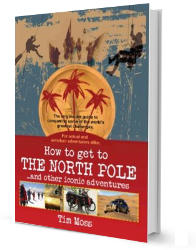
Have you ever read this blog one of the many other great outdoor websites and wondered how you could undertake some of those adventures yourself? If so, I have just the book for you. Its entitled How to get to The North Pole... and other iconic adventures and as you can probably tell from the title, it was written to be a resource for adventure travelers and explorers alike.

Written by Tim Moss, the book could have easily been called Expeditions For Dummies. Moss has taken his considerable experience in organizing more than 100 expeditions to the more remote and wild places on the planet and condensed it down into a 300 page tome on how to get to just about anywhere.  That includes choosing the right gear, honing the proper skills, learning how to deal with weather and other natural phenomena and much more.

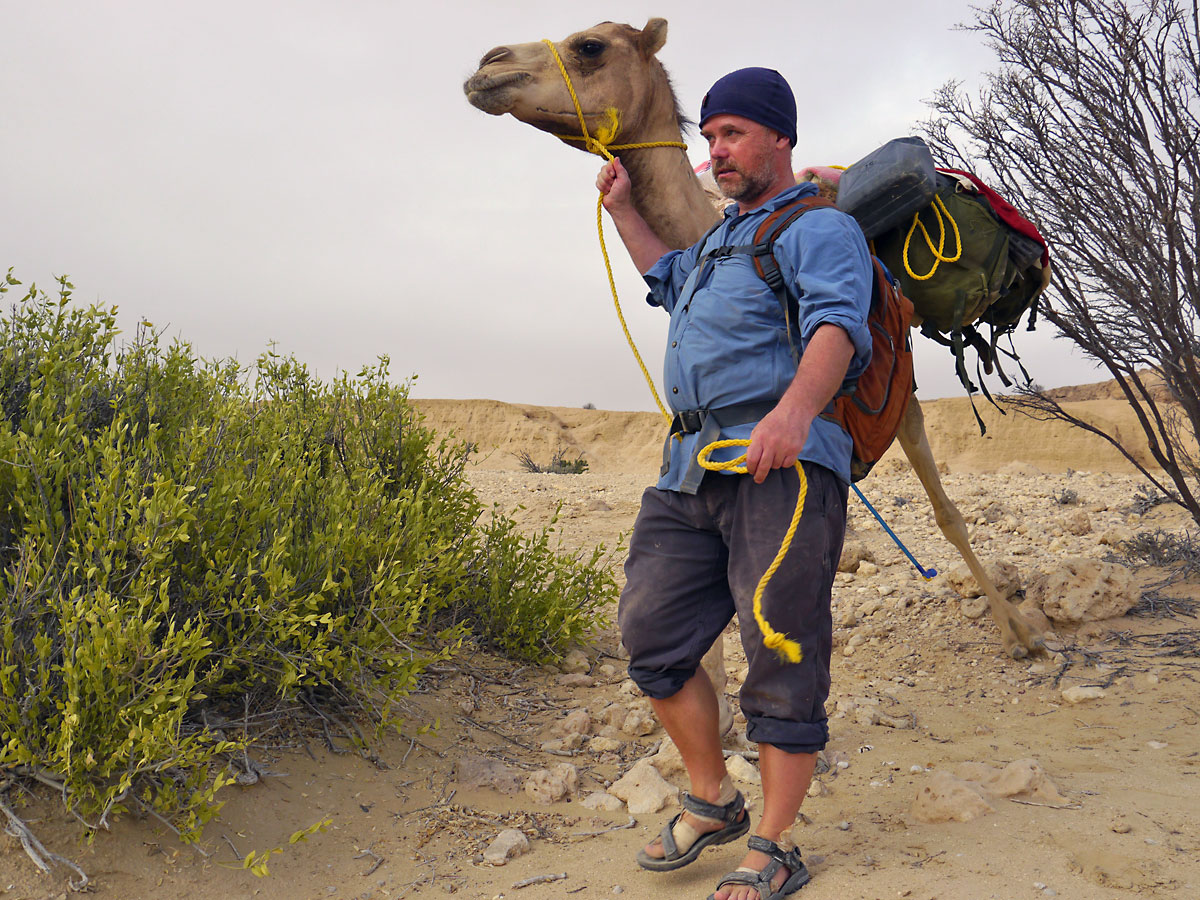
No matter what adventure you're planning this book has chapter for you. Moss has written chapters on how to cross a desert, reach the North or South Pole, row an ocean or even make the first ascent of a mountain. Each of those chapters comes with advice specialized for the particular topic. For example, in the chapter on desert trekking he offers advice on dealing with sand storms and traveling with camels while in the section dedicated to getting to the North Pole, Moss discusses how to navigate around or across open leads of water and dealing with polar bears.

Moss shares his experience in a practical, straightforward manner that not only makes it easy to understand but also retain. The chapters are well organized, easy to read and packed with all kinds of information. Not only does the author provide tips on what to eat and drink while on the various expeditions, but he also where you should sleep and even where to go to the loo.


The book can also be seen as Adventure 101 as it provides a fantastic base layer of information on a variety of expeditions that are common topics around these parts. For instance, in the chapter on the South Pole Moss explains the difference between the Magnetic and Geographical South Pole, as well as the South Pole of Inaccessibility. He also lays out the various options for getting to your destination and offers ideas on the best starting points. This is a wealth of information that will be appreciated by both active and armchair adventurers alike.

How to get to The North Pole also features a number of basic, but informative maps and illustrations. The maps show routes for rowing an ocean or pedaling a bike around the world as well as various other important geographic information. The illustrations will show you how to pick a good touring bike, tent or even sailing vessel. Heck! Even the book's glossary provides a lot of information, giving definitions to dozens of terms from the mountaineering and exploration world.

I found the book to be written in an easy to understand manner that complete beginners to the adventure world can understand, without boring the more seasoned traveler in the process. There are helpful hints and tips no matter what your level of experience and if you have an epic adventure you've always dreamed of launching, but weren't sure how to proceed, this is a must read book for sure. Moss has a wealth of knowledge to share and he gets a lot of it down in this one book. Sure, there is more that goes into an expedition than a book can teach you, but this is certainly a good place to start.

The book costs just $17.99 on Amazon, which seems like a steal with all the things you can learn inside.


Explorer Mikael Strandberg has completed his expedition to cross Yemen by camel, overcoming logistical obstacles, bureaucrats and the unrelenting heat of the desert in the process. The journey, which I've written about a couple of times in the past, was not an easy one as the Middle Eastern country has faced civil unrest in recent months, but it was a historically and culturally important expedition that had an impact on not only Mikael himself but the people that he encountered along the way.

If you haven't been reading Mikael's dispatches, I suggested checking out his blog where he has been telling the story of his travels. He is still filling in the details of the journey, but the posts that are in place there are compelling and fascinating to read. Strandberg was joined on the expedition by a young woman by the name of Tanya Holm and a few local guides helped lead the way through the deserts of the southern Arabian Peninsula. Their stories from the trail are a unique and interesting take on a country that many of us in the west don't have a good understanding of.

On July 4th Mikael posted an excellent entry on his website announcing that it was "Mission Accomplished" for Expedition Yemen. In that piece he talks about his travels in thoughtful detail saying that at times it felt like he and Tanya were the first people to visit some of the areas that they trekked through. The remote areas of Yemen remain wild, mostly unexplored and untamed and the passing of these westerners was big news amongst the hardy, but few, people who can manage to eke out a living in that beautiful but desolate place.

Mikael's stories paint a picture of how important exploration remains in our modern world. There are places all over the globe that remain mostly unexplored – including some that are right under our nose. Thankfully we still have men and women like these who still have a desire to visit those lost corners of the globe and share their adventures with the rest of us.

Congrats to Mikael, Tanya and their guides for completing this epic adventure. One that the people of Yemen will apparently talk about for years to come.

Built in 1986, the Aquarius Reef Base is one of the last remaining underwater stations dedicated to scientific research. Operated by the National Oceanographic and Atmosphere Administration (NOAA), the base is located at the heart of the Florida Keys National Marine Sanctuary, where it has been used to conduct research on coral reef ecosystems for many years.

On July 16, the base will host a team of researchers and scientists possibly for the last time. Dubbed Mission Aquarius, this team will be led by the legendary Sylvia Earl and will live aboard the station for six days as they conduct research on the nearby Conch Reef. You'll be able to follow that expedition and watch live streaming from the Aquarius itself, on the team's website. The video below includes more information on the base and it's purpose over the past 25+ years.

And for those wonder, the reason this could be the final mission to the reef base is because it has become the victim of budget cuts. It seems NASA isn't the only organization dedicated to exploration that has had to tighten its belt. We need to get this economy going again so we can pay for more programs like this one.


Do you have experience managing a non-proft? Want to work with a group of extraordinary individuals? Than you just might be interested in a job opening with the Explorers Club. The organization is looking to hire a new Executive Director to help guide the day-to-day operations of the club and work directly with the EC President and other members. The Executive Director works out of the club's New York office and over sees a variety of fund raising and administrative duties.

You'll find a bit more information about the position by clicking here, although for a full job description and application you'll need to email the current ED, Matt Williams, at mwilliams@explorers.org. Applications are being accepted through August 3rd, after which I'm sure an exhaustive review and search will take place.

As many of you know the Explorers Club had a tumultuous start to the year with a public spat between members and leadership causing some issues within the organization. In the spring the members elected a new president and things seem to have calmed down some. Most members that I've heard from in recent weeks say that the club is now in a good position to move forward and that there are new opportunities for the organization and its members on the horizon. The new Executive Director will obviously play a role in leading the group forward.

Last year a group of Swedish ocean explorers discovered a strange disc shaped object at the bottom of the Baltic Sea. The came across the object while making routine sonar sweeps of the water in hopes of finding sunken ships to salvage. At the time, they were unsure of what it was, so they planned to return to the site this summer to check it out first hand. After doing so, they are still unsure of what it is they've  found.

The object is said to be 18 meters (60 feet) around and rises like a mushroom head 3-4 meters (10-13 feet) above the seabed. It also sits at the end of a 985-foot long path of flattened seabed that gives the impression that the object landed at the bottom of the Baltic Sea after falling from above.

The divers say that they expected it to be a giant stone of some type, but that isn't what they found exactly. They discovered what they describe as an egg-shaped opening in the top and a strange stone circle formations around it that resemble small fireplaces. They've ruled out unusual volcanic activity mainly because there has never been any indications of such activity in the region.

One of the members of the team said it was the strangest thing that he'd ever experienced as a professional diver. Another said that he'd never seen anything like it in over 6000 dives. What is it exactly? Who knows, but you can take a look at it in a video over at Gizmodo. To me it appears to be a massive rock of some kind, although it is unnaturally smooth. Perhaps a meteorite that managed to survive entry into Earth's atmosphere and then rapidly cooled in the waters of the Baltic.

What ever it is, I think we all know who the right man for the job is. Someone get James Cameron on the phone stat!


After years of mostly being ignored, the Mariana Trench has become a busy place this year. A Chinese submersible named Jiaolong (aquatic dragon) is set to make another dive into the trench sometime in the next few days, where its crew of three hopes to plummet 7000 meters (22,965 ft) below the surface of the ocean. To date, the vessel has only been down to about 5188 meters (17,020 ft).

As of the last report, the small craft was still aboard the  Xiangyanghong 09 science vessel and was approximately 200 nautical miles away from the proposed dive site. The crew was waiting for a tropical storm to vacate the area, and for seas to calm, before proceeding with the operation. They intend to make a shake-down dive to 5000 meters (16,404 ft) before proceeding deeper towards their ultimate goal.

This deep sea expedition is vastly different from the one James Cameron made back in March. For starters, Cameron went down solo and in a smaller vehicle. The Jiaolong will be manned by Ye Cong, Cui Weicheng and Yang Bo who are hoping to claim a "deepest dive" record, although what that record is I'm not sure. When he went down a few months back, Cameron reached a depth of about 10,940 meters (35,900 ft).

Still it is great to see more renewed interest in exploring the ocean's depths and I'll be watching to see how this crew fairs when it finally does make its big dive. Hopefully all will go well and they'll come back with some interesting finds as well.

National Geographic will host a "Evening of Exploration" event tonight to honor two famous explores that have gone to the opposite ends of the Earth. The organization will posthumously present it's highest honor, the Hubbard Medal, to Swiss oceanographer Jacques Piccard and name Austrian mountaineer Gerlinde Kaltenbrunner its Explorer of the Year.

Piccard, who died in 2008, is best known for diving into the depths of the Mariana Trench, along with Don Walsh, back in 1960. The duo were the first to travel seven miles below the surface of the ocean, into the Challenger Deep, to explore the floor of the Pacific. That feat wouldn't be repeated for another 52 years, when James Cameron did it a few months back. Cameron and Walsh, who received the medal in 2010, will join Nat Geo CEO John Fahey in presenting the award to Piccard's family.

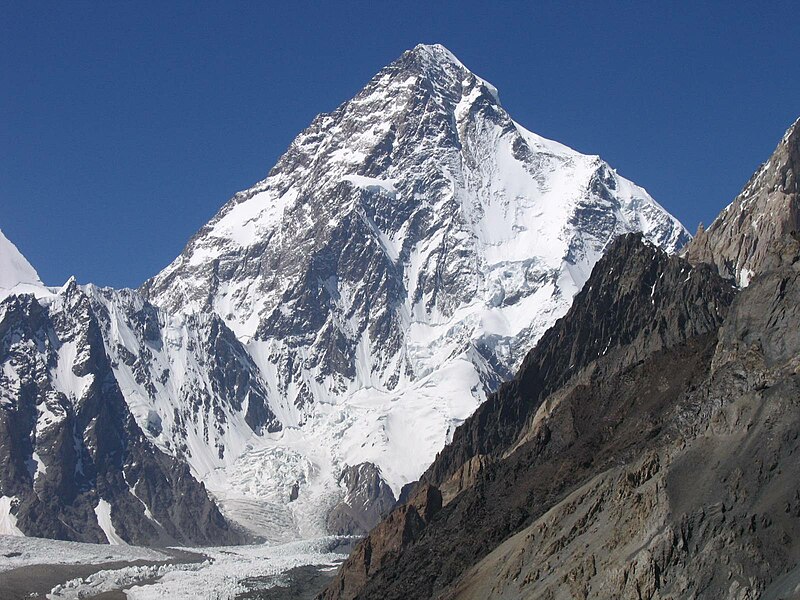
Kaltenbrunner, who is no stranger to readers of this blog, is being honored for her climbing efforts on the world's tallest peaks. Last year she became the first woman to summit all fourteen 8000 meter peaks without supplemental oxygen when she topped out on K2. It took her 13 years to accomplish this feat and along the way she has been a great role model for other climbers, men and women. She'll receive the Explorer of the Year award from last year's winner, Kenny Broad, along with a specially engraved Rolex Explorer timepiece. Rolex is the sponsor for evening's festivities.

Congratulations to the family of Jacques Piccard and to Gerlinde on these much deserved honors. For more information about Piccard, Gerlinde and the Evening of Exploration click here.

Two Belgian adventurers are in the final stages of planning a canoe and hiking expedition to the remote Inari Lake, located in Finland. The journey, which is set to begin in September, will be three weeks in length and looks to put a heavy emphasis on exploration of the region. The duo hopes to make a complete circumnavigation of the lake, provided the weather allows, spending plenty of time on and off the water.

Bert Poffé and Dirk Michiels will travel on foot and by canoe as they not only paddle the shores of Inari but also trek through the wilderness that surrounds it. The lake, which is the third largest in Finland, falls above the Arctic Circle in the northernmost region of Lapland. Covering 1040 square kilometers (646 sq. miles), Inari has more than 3000 islands sprinkled across its waters, while a wild and untamed wilderness lines its banks.

Refreshingly enough, Bert and Dirk say that they won't be chasing any speed records or racing from point to point on a map. They intend to explore the region as much as they can and that means making slow, deliberate progress. It is their hope that by taking this approach they can genuinely get to know the lake and all of its hidden corners.

In preparation for their expedition they've launched a blog that provides much more information on Inari Lake and the region they'll be visiting. Hopefully they'll also be updating that blog as they travel to keep us not only informed of their progress but share what ever they discover there.

Personally I love these small, grassroots adventures that send adventurous men and women off on excursions to remote areas. These two men sound like they have the hearts of explorers past and visiting remote Lapland should be an amazing experience.

In the video below we once again find astronomer Neil deGrasse Tyson arguing the importance of exploration and space travel for the entire human race. Tyson gives us an inspiring reminder of how landing on the moon made the entire planet come together for the first time and explains why we need to continue pushing towards those destinations beyond Earth. It is an inspiring message that is being spread by Penny4NASA.org,  a group that is calling on the U.S. government to expand the budget for the space program and set new goals for NASA.

This is an inspirational way to start the day!


Explorers Connect is a website designed to create a community for adventurers. It is a social network of sorts that allows like-minded individuals to share ideas, discuss logistics, find teammates, (or jobs!) and  more. Membership is free and comes with a number of benefits, including the ability to stay current on adventure news, network with experts and professionals, and swap stories of your own adventures.

The site was founded by British adventurer Belinda Kirk back in 2009 and has established itself as an active and informative community. Kirk, who is a professional expedition leader and filmmaker herself, recently sat down with our friends over at WideWorld to share some thoughts on EC and the world of adventure as a whole.

In the interview, Belinda talks about how she got her start in the adventure industry, which she is a veteran of at the age of just 35. She also discusses ways to approach getting an expedition funded and her vision for Explorers Connect. She says the site is all about making expeditions and adventure for inclusive and accessible. In 2010 Kirk spent 51 days at sea as part of the first all-female crew to circumnavigate the U.K. in a rowboat. She shares the highs and lows from that expedition as well, including nearly getting run over by a large Russian tanker in the middle of the night.

You can read the full interview by clicking here and if you're interested in joining Explorers Connect, you can find out more about the site here.

My friends over at the Joy Trip Project shared this amazing video yesterday and it is so well done I wanted to pass it along today. The short film features Erik Boomer, who was one-half of the duo that circumnavigated Ellesmere Island last year by kayak and skis. In this video he talks about his constant need to explore new places and the undeniable wanderlust that sends him off to some of the more remote places of the planet. I think this is something that we can all relate to on some level. Enjoy.


National Geographic has announced it's 2012 class of Emerging Explorers with 15 individuals being singled out for their unique contributions to their particular fields. The Emerging Explorer designation is given out on an annual basis to some of the best and brightest individuals who are breaking new ground while still in the early stages of their career, and it comes with a $10,000 award to assist them in their research.

Some of the amazing men and women who earned that distinction this year include underwater archaeologist Guillermo de Anda, who explores submerged caverns for remnants of the Mayan civilization, and Daniel Raven-Ellison, who is a so-called Guerrilla Geographer. Daniel uses unique and creative methods to get people to think more about the world around them. They're joined on the list by chemist Yu-Guo Guo, who has invented a more efficient way to power electric cars, and Krithi Karanth, a biologist who studies human-wildlife interaction in India.

As usual, the list of Emerging Explorers is diverse and impressive. Everyone on the list is doing interesting and important work that has the potential to shape our planet in the years to come. Simply reading about what these men and women are up to is very inspiring and thought provoking to say the least.

To check out the entire group of 2012 Emerging Explorers, click here.

As far as commercials go, they don't come any more beautiful than the one below from Quechua, a gear company that makes tents, clothing, sleeping bags and more. The video, which is shot in a wide screen aspect ratio that is certainly unique, has some of the most outstanding images I've seen in some time. It truly does make you want to get outside and head into some epic backcountry. Just the kind of thing that can kill productivity on a Monday.


MKRdezign

Contact Form

Name

Email *

Message *

Powered by Blogger.
Javascript DisablePlease Enable Javascript To See All Widget